Around late August you’ll read a number of smug blog posts by me and every other homesteader and gardener glorifying the harvest of summer. You’ll see baskets mounded with zucchini, tomatoes, green beans, and squash. There will be photos of quart jars filled with freshly canned applesauce, pickles, tomatoes. Maybe an article about freezing pesto in ice cube trays (a good tip). What those colorful photos and stories of bounty are unlikely to reveal is that the farmer/gardener taking the photos is completely exhausted, and probably SO ready for everything to just stop growing already.
When I picked 20 lbs strawberries at the end of June last year, it was all I could do to spread them out on some baking sheets in the freezer. Picking and freezing them had completely maxed out the time I had available for strawberries. Making jam or a pie was out of the question.
Fortunately, strawberries (and all other berries) freeze really well, so there’s no reason you have to make your jam in June when there are a million other things that need your attention. In fact, there’s one very good reason to freeze your berries and deal with them later, and that’s quince.
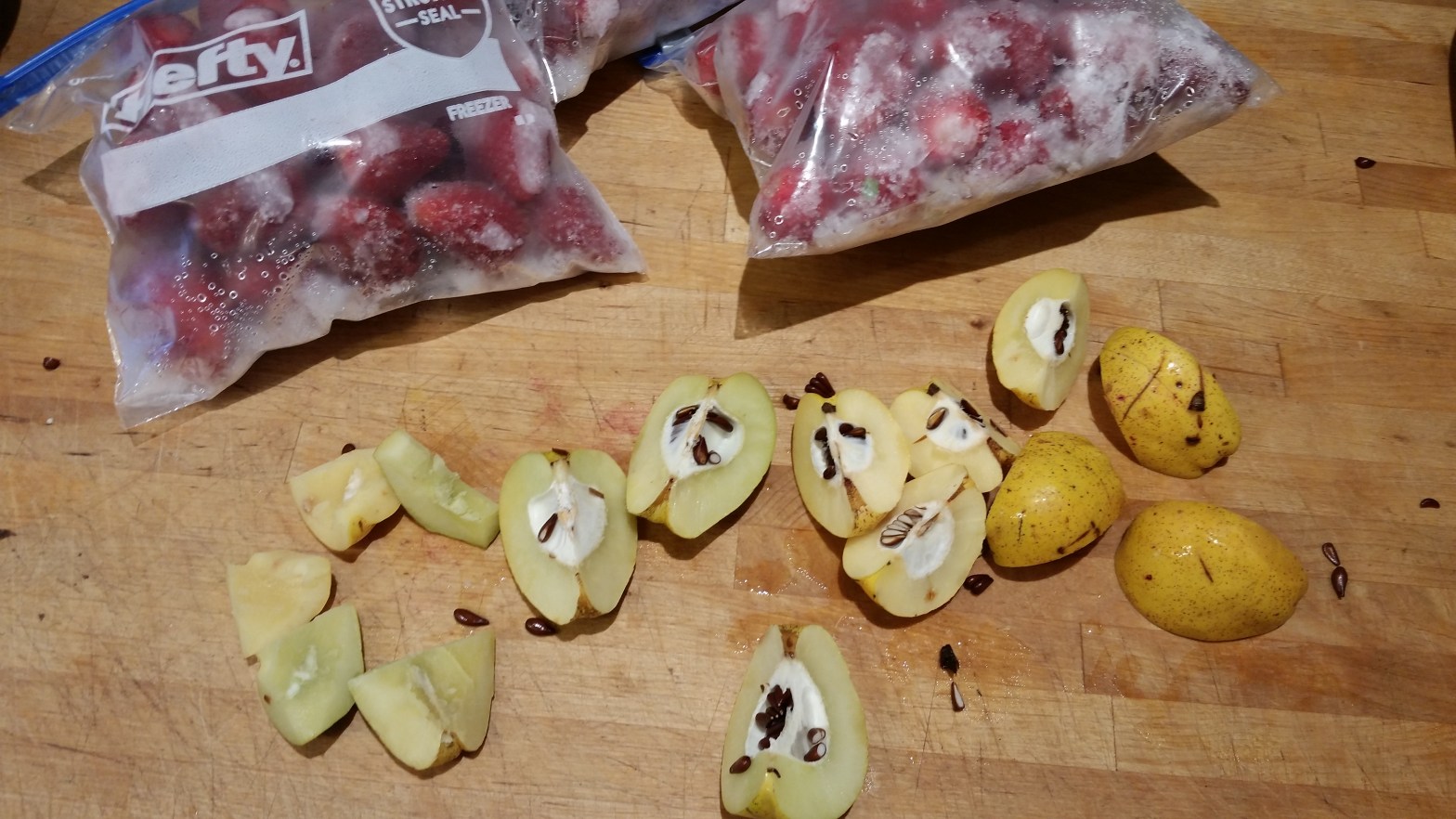
Quince is a funky fruit that grows on a very dense and not-so-attractive thorny bush, and it ripens in October with the late apples. The fruit looks a bit like a Japanese pear, but it’s rock hard and sour and full of seeds. You should not ever bite into one on a dare. It’s only redeeming feature is that quince is chockablock full of pectin, which is the stuff you buy in powdered form and add to jam as a thickener. Pectin is the only difference between strawberry syrup and strawberry jam.
In ye olden days, before you could buy pectin in a box, quince was your best bet for getting your jam to set. But quince and strawberries have very different growing seasons. Strawberries are mostly done by early July, but quince isn’t ripe until just before the first frost. So historically, in ye really olden days before refrigeration, quince and strawberries probably never met, which might explain why I couldn’t find a single recipe online for quince-strawberry jam, despite some very clever Google search terms.
So, one rainy November day during the dormant season, I decided to wing it. I shredded the fruit of ~6 quince in a food processor, added 4 quart bags of frozen strawberries, a couple of cups of sugar, and boiled it all together then blended with a stick blender. My approach was very unscientific compared to the instructions on a store-bought box of pectin, and I don’t have a recipe to share because it was very simple: I added sugar until it was sweet enough for my taste, and quince until it was thick enough. You can check the thickness of jam by putting a drop on a frozenpage. If it sets, the jam has enough pectin. If it runs, add more shredded quince and continue to cook.
My quince strawberry jam was a stunning success. I will never again make jam in the middle of the hectic summer.
And that’s what’s great about winter. While I can (and do) complain about the flooding, the freezing pipes, and the low light, in the dormant season I actually have time to do whatever I want. Tasks (like making jam) that I dread as a sweaty time-consuming chore in summer are delightful during the dark days of winter.
And really, a bite of summer strawberries in November is an inspiring thing.
Its been 9 months to the day since we moved from our tiny urban lot to these 7 acres. Included in the deal was a mostly-renovated farmhouse, two leaky unswept barns, “the chalet,” “the bakery,” and a laundry-shed-cum-chicken-coop/rat factory. All of which, including the pastures, paddocks, and ancient apple trees have been unlimited sources of projects.
As you might expect, last Spring, the barns were full of farm-y stuff. From a cracked wheelbarrow to fencing. From the original bottle of Round-Up to a scroll saw with a bad switch. Junk? Useful?…No idea. So, most things stayed and were leaned up against the walls eating up floor space, labyrinthine.
Until last week, when it began. Starting at one corner the tornado’s vortex swarmed. Everything pulled out, sorted, and put back…maybe. But, put back where?
Until now, I simply couldn’t have organized the barns. We didn’t know what we were doing. (In more ways than one!) And we didn’t know where we were doing it. Gardening, carpentry, plumbing, electrical, woodworking. Chickens and pigs. Lumber and fasteners of all kinds – and from all decades of the 20th century, it seems. Electric fencing, feed, hand tools, and irrigation supplies. Pulleys and ropes.
For nine months projects where riddled with, “Hey, have you seen the whosamuwhatzit?!” Or, “Where’s the such and such?!” Followed by an easy 10,000 steps per day wandering. And now nearly everything has its home. And projects seem to take half the time.
Nine months. So, what has been birthed? Systems, efficiency, and sanity. Its a good feeling and a good sign. Because on tap is a greenhouse, water harvesting, pasture renovation, heritage turkeys, and perhaps even bees. Stay tuned…
By the time we got to so much as walk our pasture this year after moving in, the grass was knee high. A couple months later it had finished seeding out and begun to flop over in places susceptible to winds. Every now and then one of us would march out the weed-eater to keep the hot-wired fence from shorting out.
Of course, there would be all manor of safety equipment to don as well. Ears, Eyes, and dustmask (if you are prone to hay fever like myself) are required. Fire it up and try not breath in too much 2 cycle exhaust while you slowly, but surely, get caked with itchy chlorophylic shrapnel. While we were able to keep the perimeters free, the going was so slow and obnoxious that it just wasn’t worth the effort to attempt to clear fields.
Out in the barn was an older solution. Hanging up were a handle (snath) and the blade of an ancient scythe. I tried to reassemble the two parts, but they were too worn. I suspect there are rusty scythes hanging in most old barns across America. Tired, but of more pure usefulness than is typically understood.
Having seen videos of scythes racing gas trimmers and the scythes winning decidedly for speed and easily for style, I went looking for a modern version. Thankfully, there are local craftsmen today who specialize in making high quality snaths and affixing them to lightweight Eastern European blades. Blades that keep a consistent razor edge (with proper care) allowing for an ease and efficiency that is sweet to behold.
The ladies de-seeding the hay.
Now after 6 months of swinging the scythe, I am beginning to get the hang of it. Or, at least I can cut hay or mow mulch for a few hours without locking up my neck for days. And I can harvest a decent amount too, which is good because there is a lot of need on the homestead. We use the cut grass for pig feed, pig and chicken bedding, and garden mulch. The latter is tricky as you could invite grass to compete with your veggies. The former is tricky because the pigs will snack on their bedding until its gone, like the true opportunivores they are!
After learning the technique, the motion is no longer taxing. In fact, it is energizing in a way. Also, the clean slicing of the blade rather than splattering of the plastic string means less sneezing at the end of the day!
Sigh. Josh and Gwen have been busy since the New Year. We’ve been quiet because for a few weeks there wasn’t much to report, and then all of a sudden too much, and we were too crabby to talk about it.
This happens to be the coldest winter since we’ve lived in Washington, with most nights (and many days) in December below freezing. This meant the added chore of breaking up ice in the waterers and chiseling frozen pig poop out of the snow. It also means it’s been too cold (and windy) to do most of the winter outdoor projects, like building a greenhouse and a hügelculture raised bed, which are on our shortlist.
In most ways, the cold necessitated a pretty restful month at Bellfern Homestead. The pigs are in their winter confinement area, where they spend most of their time snuggled in a porky heap, and the chickens stay close to home. The cold even negotiated a truce between two flocks of chickens–the House of Capulet and the House of Montague–who had been antagonistic neighbors all summer and fall. On one particularly cold day they agreed to put aside their differences and snuggle up in one giant pile, and they have been combined into one House of Chickendom ever since.
Pigs in snow are pretty cute.
Among its many assets, our farmstead came with a funky rental unit–I call it the chateau, which is a pretty grandiose overstatement–that has recently been inhabited by a like-minded friend who is excited about our vision for a sustainable food system and wants to be part of it. We’re so lucky to have her here. But the chateau has problems that didn’t come to light until it got really cold and had someone living in it full-time.
In the course of one week, the following problems have surfaced in the chateau:
The drain pipe from the kitchen sink clogged and backed up
The water pipes froze
After finding and thawing the frozen section, the fittings cracked and disintegrated
The gas range started leaking gas, and our repair guy said the whole range needs to be replaced.
And that’s just the chateau. While we were scrambling to head off each crisis, one of our chickens stepped in a hidden rat trap and broke her leg, and the whole flock of chickens got worms. And since the dogs hoover up the random chicken poop, they probably have worms too, as do the pigs, and so the whole animal kingdom of Bellfern Homestead (minus Gwen and Josh) are getting dewormed. Josh and Gwen fervently hope to never need deworming.
Aside from having worms and a broken leg, she’s doing pretty well and can now put some weight on her leg. Hopefully Crutches will pull through.
We have agreed to be done with bad news for a while. If I can have just a few days where nothing breaks, and no animal is sick or suffering, I’ll be able to appreciate the good that has come out of all of these unfortunate events.
2016 was a year of firsts and learning curves. We had some exciting small successes (we made wine and cider from our own fruit! we raised and sold our first farm product!), and quite a few fails. The first time we fail at something is always the hardest. We feel guilty about whatever we did to cause the problem (left a rat trap where a chicken could find it), or how we might have prevented the problem (better insulated the pipes), and we’re not confident about how to fix it (why isn’t the drain snake unclogging this?). Our inexperience as farmers is glaring at times. But the second time it happens is not as scary. For example, I’m now a pro at identifying and treating worms in our animals, and discovering the chicken worms yesterday wasn’t as traumatic as it would have been a year ago. We also know 100% more about the innards of the chateau than we did 1 month ago, knowledge that will make our lives much easier next time a drain clogs or a pipe freezes. And I learned how to splint a chicken leg, which involves about what you’d expect–gauze, sticks, and athletic tape. In the decades of chicken ownership ahead of us, that was probably not our last broken leg.
With a year of tremendous firsts behind us, we’re thankful to have a little more confidence going into the year ahead.
For 4 days and 3 cool nights our friendliest chicken, the petite Rhode Island Red with black tail feathers, was missing. She stopped returning to the coop in the evening. We both leave for work in the dark and come home in the dark, so we looked around the property with a flashlight everywhere we could think that a chicken might fit. No chicken.
Gwen had a hunch that she was on an illicit nest somewhere on the property, but we had looked everywhere. There was nowhere left for that chicken to hide. I figured, “Score one for the coyotes, finally.” We had yet to lose any layers to wild animals, but have lost two to other causes: one to illness, and the other to our own pet dog, Dusky. Dusky, I believe, had the best intentions of returning a wayward chicken to the coop one night, but didn’t quite give it the safest lift in the dank of her jowls. She ended up puncturing and likely breaking the back of one of our cuckoo marans so, we had to transition her to deep-freeze status. The chicken, not the dog.
Even after 6 years of raising chickens, I still take these “failures” pretty personally. So, when Red hen was gone for an unprecedented amount of time this week, I really felt bad. I wondered if it was indeed best to let the gals free range wherever they darn well please.
But, I just can’t do it. I can’t coop them up. I am a firm believer in the benefits of movement. And, man, do these birds move! From dawn to dusk they are scratching, leaping, running, flying, dust bathing, pecking, flapping, tilling, laying.
We’ve gotten lots of eggs this fall (in the coop, in the chicken tractor, on the hay bales, in the feed trough, behind the fencing, etc), but still we couldn’t shake the feeling that there ought to be more eggs. Surely all the young ones are on a five-a-week schedule…right?
Well, we redoubled our efforts to find Red today (aw crap, now she’s got a name…). Armed with a high-powered flashlight we peered under Barn One to the furthest back dark corner and saw a beady and somewhat guilty looking eye reflect back.
We ran around to the barn side closest to her and saw a few eggs that had rolled out from under the barn. Mystery solved!
Do you see what I see???
Oh, and what a stash it turned out to be! She was trying to sit on 2 dozen eggs. What dedication! I wonder if she ate or drank at all for 4 days?
A chicken who is dedicated to sitting on and hatching a clutch of eggs is called “broody.” Our chickens don’t have a rooster (yet), so those eggs were never going to hatch. Poor Red didn’t know that she was on a failed mission from the get-go. Gwen locked her up in a dog crate inside of the coop with food and water to “break the broody.” Broody chickens get weak because they don’t eat and drink much. We have a cold snap coming up, so that chicken cannot continue to spend the night alone under the barn.
Some of those eggs have been under the barn for almost a month, so we couldn’t eat them. Lucky pigs get hardboiled eggs for dinner!
When purchasing the farm 7 months ago, we inherited a lot of stuff. From outbuildings to questionable lumber, from electric fencing to old roofing, from drainage problems to really smelly compost.
Now, Paul Wheaton says, “If it stinks, you are doing it wrong.” And my experience says that is true. I spent summers growing up in the Midwest where when winds were just wrong, the surrounding hog farms wafted penetrating odors. Kinda burned your nostrils a little actually. Now that we have pigs, when we recognize that smell brewing, it is time to do something.
Move them.
Add carbon.
Remove nitrogen (yes, scoop poop).
Interestingly, if a compost pile stinks, it isn’t too different to amend.
Move it (by turning)
Add carbon, or nitrogen, depending.
I like to mulch it (top dressing w/ carbon), which I believe decreases the amount of escaping greenhouse gases and keeps the moisture balanced.
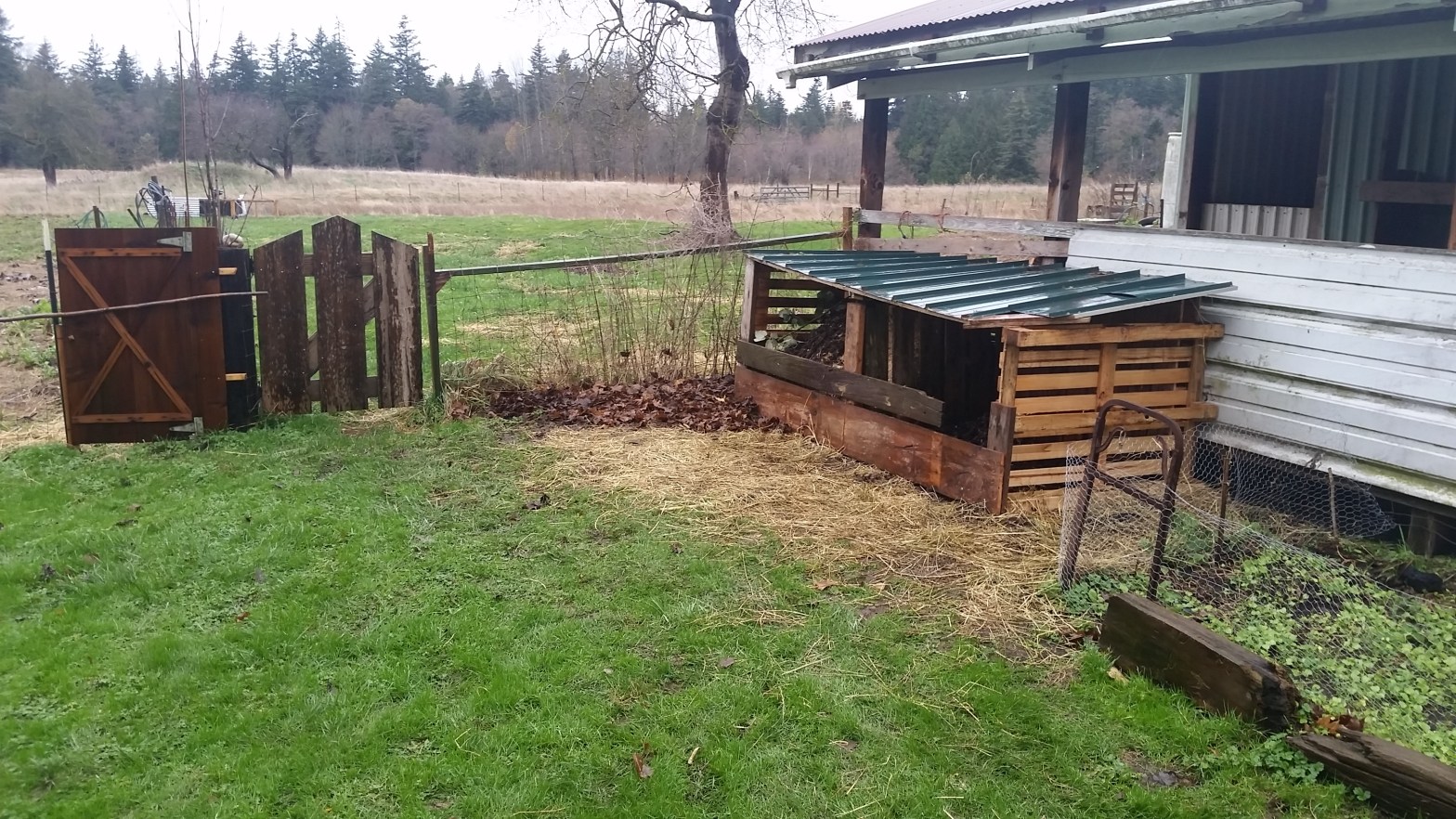
Anyway, back to the inheritance. Amongst the lot were several pallets as you might expect on a farm, just lying around. Because our chickens will unpile any pile around, the compost needed containing, as well as unstinkifying. Enter pallets.
Pallets make nice walls, gates, platforms, you name it. They come in varying sizes, weights, and degrees of grossness. The last pallet pick up we made yielded to pallets where the wood was clearly sprayed with something orange. Around here, treated lumber is coated with copper arsenic or some other unsavory chemical stew. Its probably not fresh squeezed OJ anyway. So, let that be a warning if you want to use them next to edibles, or what feeds your edibles.
Two stall compost shelter:
Pig paddock gate:
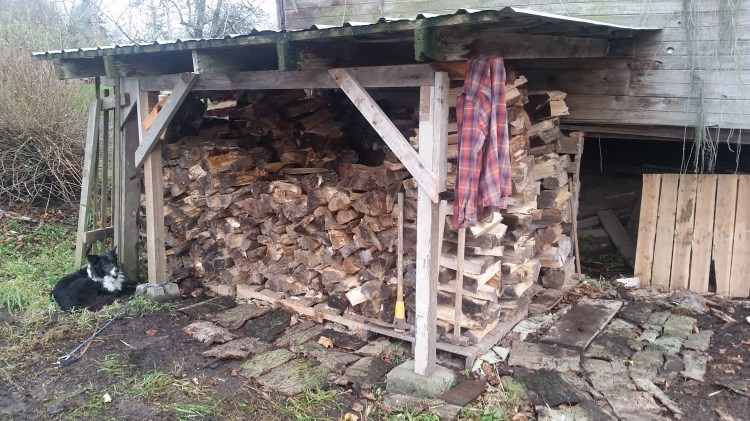
Flooring for firewood:
Farm chic = use what you got and make it last, for a while at least. Form will follow function. And frugality seems to help it look a little better.
I wouldn’t deliberately choose to process chickens in a cyclone. It’s just that when you raise meat chickens, you’re working on a timeline. There’s a lot to line up: you have to consider the day the chickens were hatched, and calculate 7-8 weeks to determine the butchering window. And when you’re a part-time farmer, weekends are when you get stuff done, so that further restricts your timeline.
If you’re lucky enough to have access to a poultry processing equipment co-op (we do), then you also have to check the rental schedule to make sure the equipment will be available on weekend 7 or 8 from the chicks’ hatch date. You have to order bulk feed in advance based on their estimated lifespan and anticipated consumption. It’s a lot to figure out before you even place an order for a batch of baby chicks.
But after all of your careful planning and scheduling, there’s no possible way you can know that the “storm of the century” will be predicted to landfall the same weekend you decided to order chickens 7 weeks ago. (One report went so far as to compare the force of the impending storm to a Category 3 hurricane, with anticipated gusts exceeding 100 mph.)
I’m learning a lot about “best laid plans” as a farmer.
Due to our work and travel schedule, we were in a bit of a bind, and decided to carry on with plans despite the dire forecast.
In an effort to be smart and prepared, we picked up the processing equipment and set everything up Friday night, in hopes of being indoors for the worst of the storm on Saturday. We bought a generator so that we could still power the plucker and scalder if the power was out. We moved the chickens out of the field and into the barn and secured all of the doors. We prayed.
Saturday came–the forecasted stormageddon day–and then it went. But the storm never really showed up. We scratched our heads and shrugged, grateful to still have a roof on the barn.
Three capable volunteers came to the farm on Sunday and helped us process the 26 birds. The Featherman plucker that we rented had a defect and tore apart several of our birds, which were then unsellable. We ended up plucking over 20 birds by hand. It was fine.
There are dozens of YouTube videos showing you how to kill and eviscerate a chicken, so I won’t go over the details here. But there are considerably fewer resources out there that break down the economics of a meat bird venture. I want to provide a breakdown of our expenses, both for anyone considering raising meat chickens, and also for those who think organic chicken is too expensive. This stuff is good to know.
Fall 2016 chicken expenses in the Pacific Northwest:
Item
Quantity
Price
Total
Baby chicks*
30
$3.35
$100.50
Starter feed
1 40 lb bag
$33.90
$33.90
Grower feed
2 40 lb bags
$29.99
$59.98
Broiler feed
6 40 lb bags
$32.99
$197.94
Processing equipment rental
2 days
$27.13
$27.13
Total
$419.54
*This cost includes shipping from Murray McMurray Hatchery.
Of the 30 birds we ordered, 26 survived to processing day (better than average mortality rate for the Cornish cross breed), bringing the average cost per bird to $16.14. After 7 weeks, they averaged 4.1 lb per bird dressed, averaging out to a cost of $4/lb. Of course this doesn’t include the amortized expenses like the chicken tractor, waterers, and feeders, or Farmer Josh and Farmer Gwen’s time watering, feeding, and moving the birds daily (~6 hrs/week), not to mention butchering. So there you go.
We charged $5/lb dressed, which equals a pretty small profit margin if you assume that all 26 birds were sold, which they weren’t. If you’re super into this topic and want more insight into the real costs of raising meat chickens, read the Chicken Thistle Farm post on this topic. Those guys are amazing, and we hope to one day have our shit as together as they do.
I have reflected a lot on this recent endeavor, and I have some valuable takeaways for next time.
We have to reduce expenses. Clearly the most expensive part of this endeavor was the organic locally milled feed. Organic feed is expensive around here, there’s no way around it, but we could realize some savings in the future by buying in bulk. Buying by the barrel instead of by the bag would have saved us about $60. We didn’t know where to find organic feed in bulk when we started the chickens, but now we do and will buy by the barrel in the future. If you can buy by the ton, the savings is even better.
Our chickens had a poor feed conversion ratio. There are lots of charts out there telling you how many pounds of food you should expect a Cornish cross broiler chicken to consume in 7 weeks; most estimate 11-12 lbs per bird for birds raised in confinement. Our consumed a whopping 13.8 lbs, and they weren’t all that big. Why? They were on pasture and had bugs and grass to eat, so we thought they would eat less than a confined bird because of all of that wholesome natural goodness, but this did not turn out to be true. Something we need to consider for the future.
I need to line up customers before even ordering chicks. Most of our acquaintances (claim to) eat on the organic and free-range end of the spectrum, so I assumed that I’d have no trouble selling these chickens when the time came. We priced our chickens a little lower than a comparable product from our local organic food store. But I had trouble selling these chickens. I don’t know if it was the sticker shock of an organic pasture-raised bird (~$20), or if people prefer their chicken already boned and neatly divided into thighs and breasts (maybe a topic for another time), or if I overestimated my community’s culinary preference for chicken. I do understand that it’s hard to reconcile your ideal preference for pastured organic chicken when you can get a roasted chicken at Fred Meyer for $5.99. I will have to give more thought to advertising and finding customers if we decide to raise chickens again next year.
And finally, a few nitty gritty tips for people considering processing a big batch of birds:
Screw a nail onto the edge of your worktable to hang your hose nozzle on. You will be constantly reaching for the hose while eviscerating, and you don’t want to be digging around on the ground for it.
Nylon mesh dish scrubbies (3 for $1 at the Dollar Store) make quick work of cleaning up the yellow crumbly outer layer of chicken skin.
Have several clean, sanitized buckets nearby full of cold water. There are many stages of chicken processing where it’s useful to dunk the bird for another rinse or a quick chill.
Have one small bucket of bleach water nearby, clearly labeled so it doesn’t get mixed up. This is useful for sterilizing any cutting surface that gets contaminated by chicken poo, which is inevitable.
Shop towels are useful for blotting dry cleaned birds, which get very waterlogged after all of the various chillings. Shop towels are more durable and absorbent than paper towels.
Cheerful and capable volunteers are gold. Processing meat birds is not difficult and anyone who can responsibly handle a knife can do it. That said, people who are inattentive or have poor coordination should probably not do the eviscerating, so assign tasks to your volunteers thoughtfully 🙂 We totally scored in this department.
There it is! Maybe not the most entertaining post, but I hope this information is useful. When you are considering buying meat or produce from a local farmer, and you’re wondering if it’s worth the price tag, consider the tremendous logistical challenges your farmer has worked out on your behalf, the math that’s done in the background, the unforeseen cyclones they had to work through, and the real expenses of raising organic and natural food.
The inaugural launch of our (Joel) Salatin style pastured poultry pontoon occurred in mid-August of this year. Typically, broilers are done in the Spring when the grass is growing fast and the temps are warming nicely. But, since we didn’t move onto the homestead until May and were busy setting up 4 pastured pigs and 15 pretty much feral layers, we didn’t get to raising 26 Cornish Cross until fall.
In early August, the pasture was so tall and crispy that I lay awake at night fearing becoming enveloped in a grass fire. So, I busied myself mowing the 3 foot fescue and setting up a sprinkler system to green things up. Meanwhile, Gwen penciled out the plan on the calendar and made sure that processing equipment was rented, organic grain was sourced locally, and the birds were shipped on time from Iowa.
Now, chicken is tasty. Everyone likes it. Especially, other animals. So, the number one infrastructure necessary is for protection.
Notice the hawk sitting atop the fencepost casing the joint.Protected, too, from domestic animals as well!
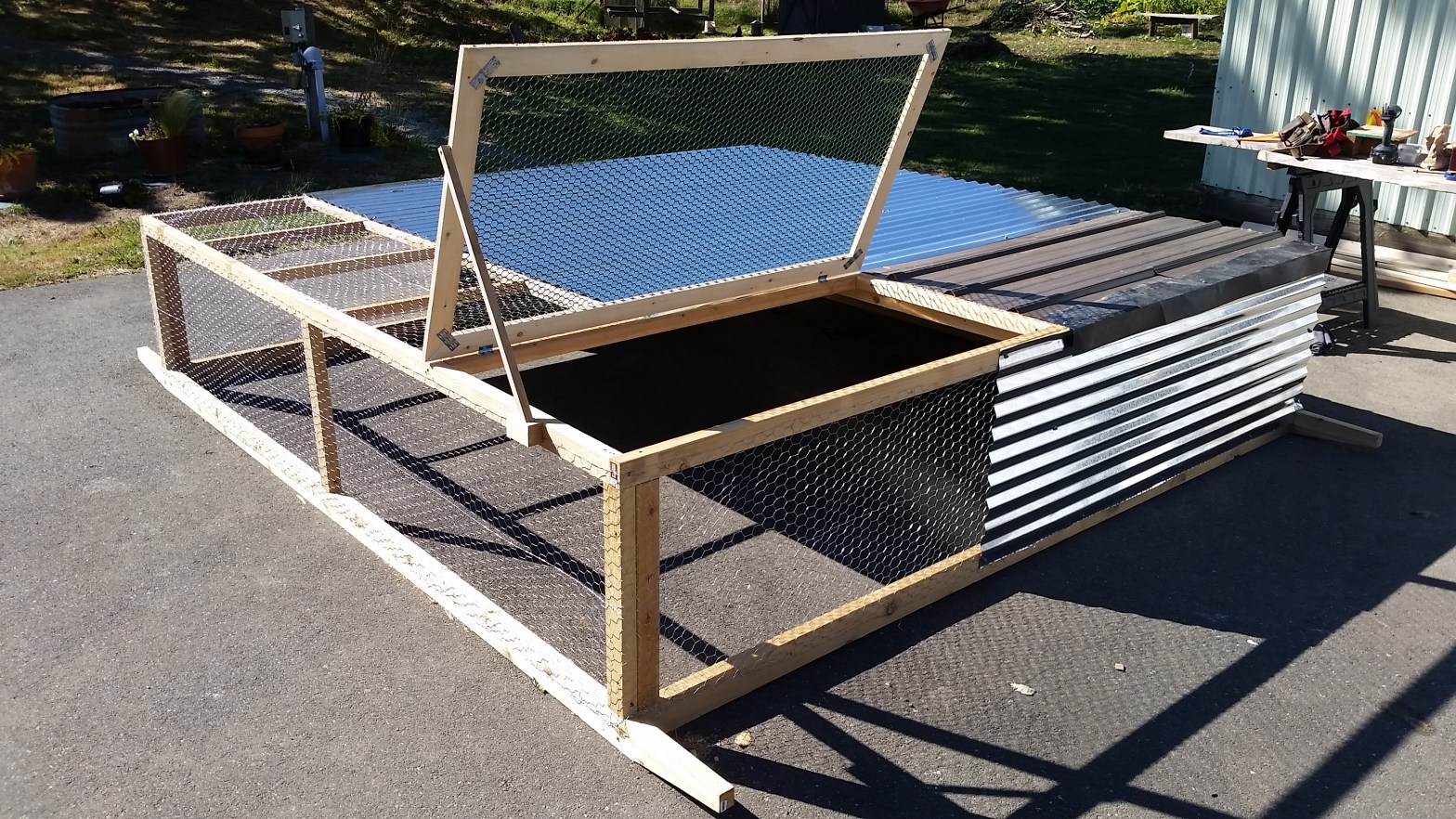
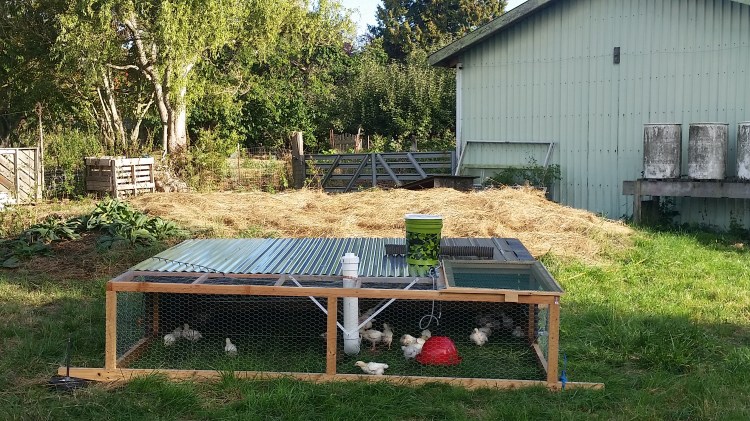
Enter the Yellow Submarine. Built out of dimensional lumber, screws, roofing, and wire, this ship is meant to set sail on fields-o-green and find a new port every day or two. It is 10′ x 10′ x 2.5′ and set up to be skidded (we ended up putting wheels on one end for greater ease of transport).
Periscope, bell waterer, and happy hens.
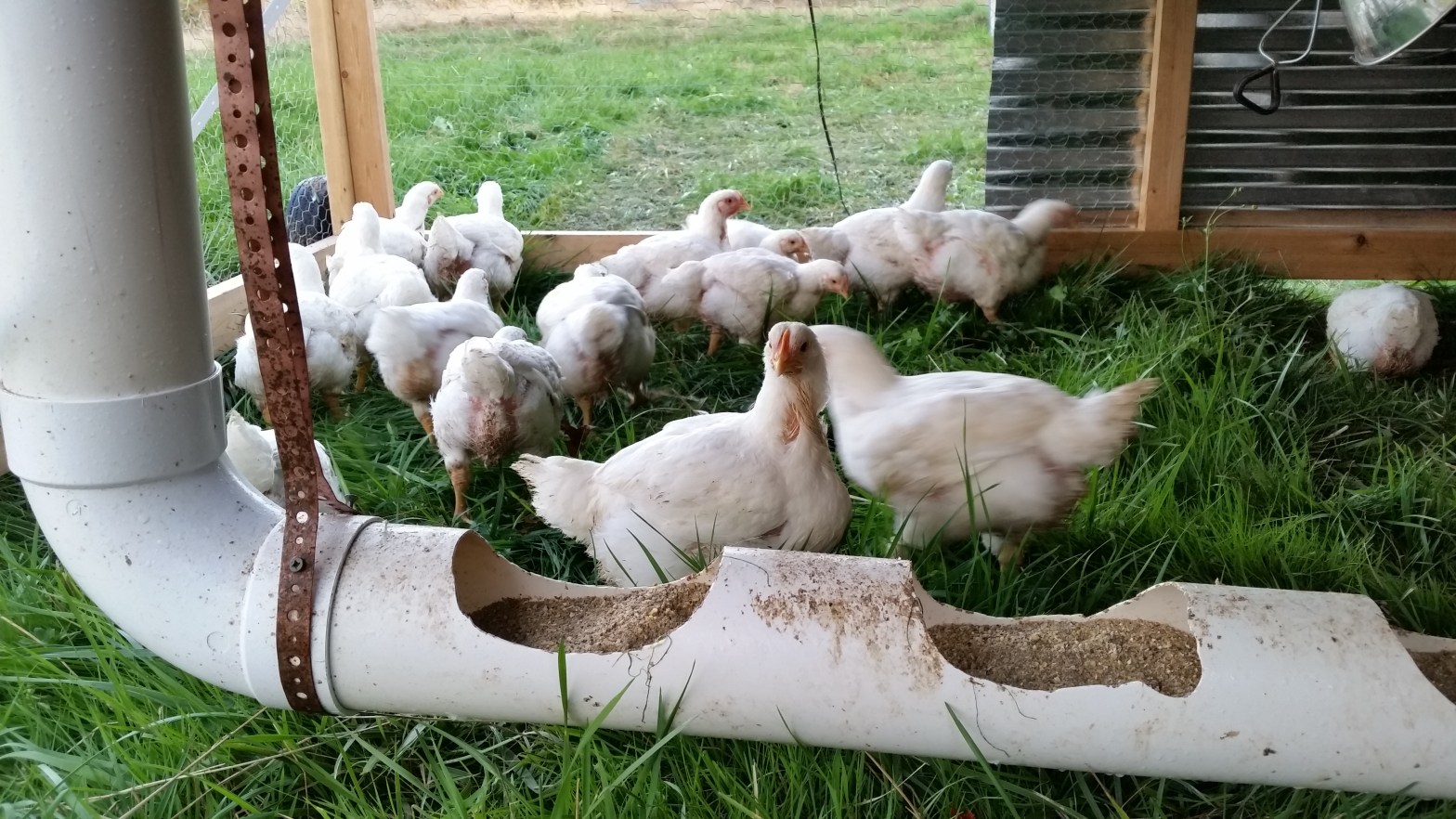
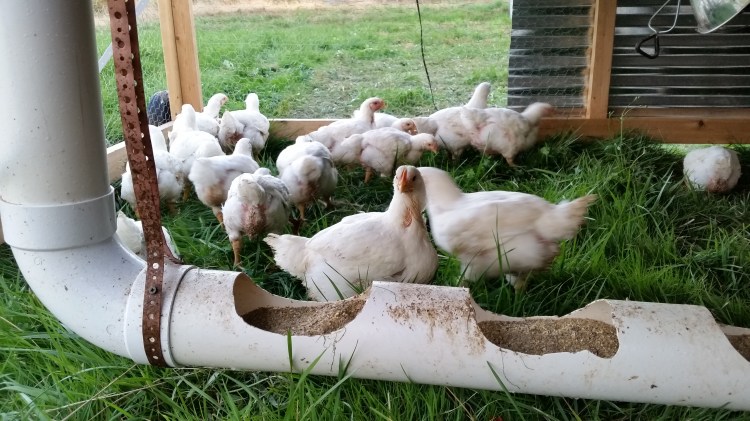
Since we both work full-time, the system needed to be as efficient as possible. So, integrated into the design was ease of watering and supplementary feeding. We intalled 4″ PVC drainpipe for pouring dry feed into from outside. And we ordered a nifty counter-balanced bell-shape waterer plumbed from a 5 gallon bucket that sat atop the structure.
Growing up fast and healthy!
I ain’t gonna lie and say it was all that easy. Let’s just say we didn’t need to swing around any kettlebells after pulling this beast around daily! There were plenty under-caffeinated mornings where the hose didn’t quite reach and the wet grass soaked the bottoms of your office pants. But, in the end, after a couple hours on the Romertopf in the hickory smoke saturated ceramic dome grill, the delicacy that adorned our dining table was soooooo much better than anything you will find in the store! (21 of the 26 ended up adorning friend’s tables as well).
Fruits of labor.
And next Spring, thanks to all the extra Nitrogen, our pasture will be just that much greener and tastier for the next batch.
As the summer ended, we felt that we knew the homestead pretty well. We knew where the pasture was thick and healthy, and we knew where it transitioned into sedge–an indicator of a low area. We had a mental map of the labyrinth of electric fence wire in the pastures, and how to direct current from one to the other. We learned that our fields are full of many weeds, ranging from the “friendly weeds,” like stinging nettle and comfrey, to annoying but benign buttercup and thistle, to my nemesis morning glory (also known as bindweed and “damn moonflower.”)
We knew which apple trees bore first, which were best for cider, and which ones we need to cut down this winter. We knew where to keep on top of the blackberry that encroaches the perimeter.
And we took passing mental note of these odd ankle-twisting ditches that snake through the yard, garden, and pasture…
Almost seven and a half inches of rain later (in October alone), Bellfern Homestead is suddenly an alien landscape. A lake appeared in our back pasture (the photo at the top). The groundwater level rose so high that it flooded our septic tank, which emitted a panicked buzzer when it couldn’t pump fast enough to deal with the inflow. And those mysterious ditches now run with water, shunting it away from our driveway and directly into our summer pig paddock, which transitioned quickly from hard-packed dirt to 8-inch deep mud so sticky that even the pigs don’t want to walk through it.
I know that every children’s book shows pigs happily rolling in mud, but omnipresent mud is not a healthy environment for a pig. Mud harbors parasites, and can cause infections on feet and bellies that never dry.
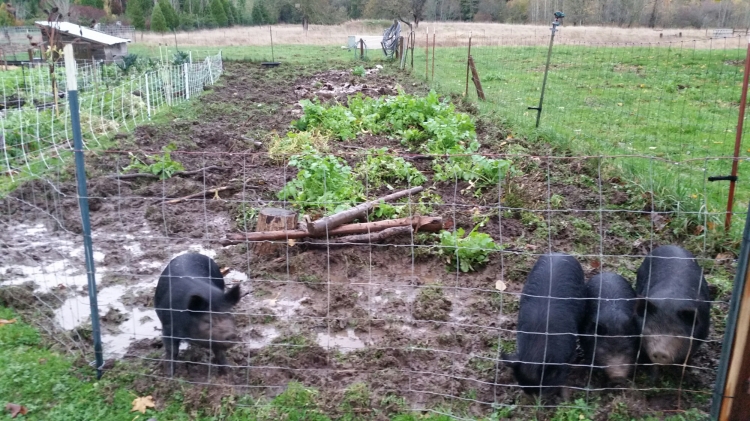
To get the pigs out of the destroyed paddock, we moved them into our vegetable garden, which was mostly done for the season and ready to be tilled under anyway. The pigs made quick work. The whole garden was completely tilled under in 1 week, and every bit as muddy as the paddock they had just evacuated.
This gives you a pretty good idea about the work 4 small pigs can do in one week. The green strip in the middle was protected by some electric net, because we’ve still got some kale and chard in there. The whole garden looked green and lush like that when we let the pigs in there. 7 days later, it looked like this.
Which brings us to the dilemma of the week. We had planned to raise these pigs for about a year, up to around 120 lbs (American Guinea Hog are a very small breed). They’re all around 70-80 lbs now and growing slowly. But the ground is so soft that every time we move them to fresh green pasture, they destroy it much faster than it can regenerate, leaving lots of open muddy areas where weeds will germinate. We’re not sure that our pastures can support these pigs over the winter, but the pigs aren’t yet big enough to sell to customers, and they’re also not big enough to justify the expense of butchering.
I don’t remember what kept me up at night when I lived in the city. Was it my job? Was it planned house renovations? Now, I lay awake wondering if I want to learn to butcher a pig from a YouTube video, and if I’m brave enough to try it. And I worry that the coyote scat out in the field is getting closer and closer to the house and animals. And that the pigs will get sick from the wet or mud before we can even eat them. I could go on.
But I won’t. There’s always more than one narrative, and I can choose which one to tell. This week, I’m choosing the narrative of blessed abundance. We have an abundance of food security, water, and space. We have good neighbors and good friends. We have short days and long evenings indoors snuggled under fuzzy blankets and fluffy dogs. From this perspective, winter is good.
The green tufts behind the pigs are daikon radish, which apparently are the lima bean of the pig world. Even when there was nothing left to eat, they still wouldn’t touch it.Bellfern Lake
Josh turned 41 last week. What do you get for the guy who loves growing stuff, but already has 10 apple trees, 3 pear trees, 3 cherry trees, and more plum trees than we can count?
More fruit trees, of course.
We’re continuing to get to know our property and all of the things that already thrive here. Our dog Dusky, for example, enjoys rolling in very odiferous wild animal poop out in the back field; we assume it’s a resident coyote, though we’ve never seen any evidence beyond scat and 2 dead ducks.
We have several mystery nut trees that revealed themselves to be heartnut in early September–a sweet type of walnut.
I’ve gotten to know the resident rat colony, which is thriving, thanks in large part to our dogs’ and cat’s efforts to scare off all of the feral cats that used to patrol this property before we arrived. Managing the infestation in our barn and chicken coop has challenged my permaculture principles.
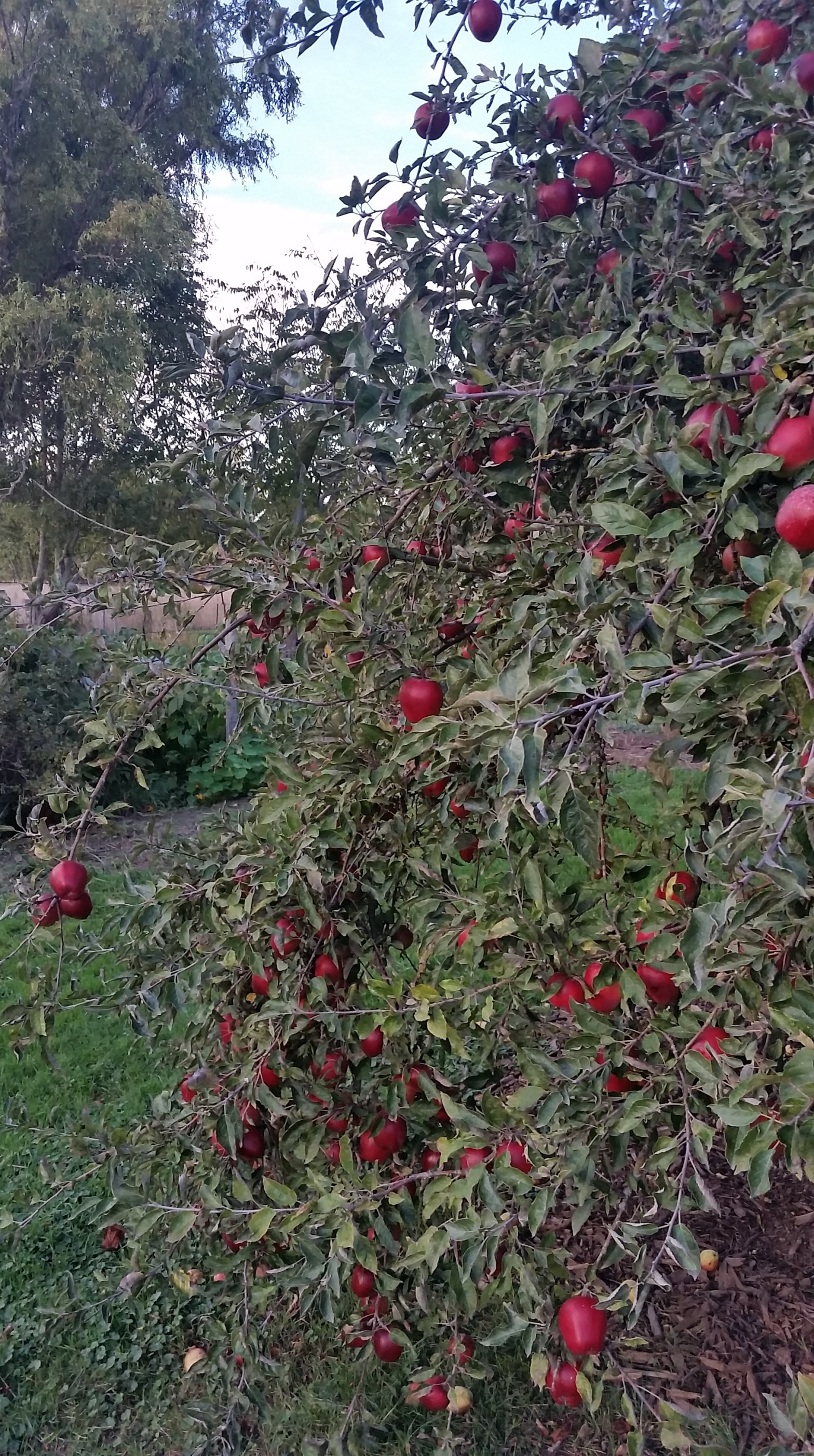
And, of course, apple trees. We have a lot, and we’ve enjoyed watching each one ripen, tasting the fruit, and speculating about what variety it might be.
We know that at least 3 are Yellow Transparents, the earliest variety that ripens around July with a soft, bland flesh and a pale yellow-green skin. They’re Ok for making applesauce, but most of our bounty (and they are bountiful) went to the pigs, who thought they were fantastic.
Why would anyone plant Transparent apples, we wondered, given all of the other tastier options? They are the cold cereal of the apple world: serviceable, but nothing to write home about. But they show up in backyards all over Bellingham, and usually litter the ground with unwanted mealy fruit in mid-summer.
Our neighbor, who knows everything about plants, answered this question. He told us that “in the old days” apple trees were planted in 3s: Transparent, Gravenstein, and King. Transparents are a universal pollinator, with a reliable flowering season that overlaps many other varieties, even those that ripen later. They weren’t planted for their fruit, they were planted for their flowers. So if you’re ever at a backyard party, and someone is wondering about the tasteless Transparent apple tree planted by a former owner, you can show off your new knowledge and pipe up, “It’s a universal pollinator! Like type O blood!” Then wait out the awkward silence before someone changes the subject.
In proof of our neighbor’s theory, we also have 2 Gravenstein and 2 King apples, and 3 mystery varieties that ripen in early and late summer.
What we don’t have is apple trees that ripen in late fall, right before the first frost. And late-fall apples make the best cider. And I really love hard apple cider.
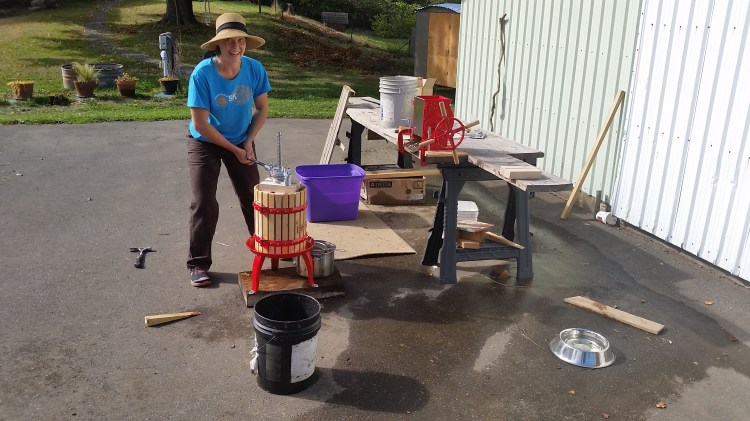
So for his 41st birthday, Josh received a gift certificate to Raintree Nursery and a cider press.
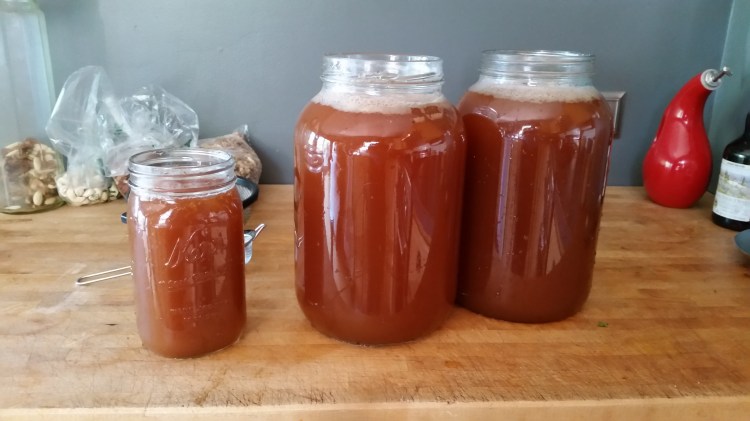
We did a trial run last weekend with the 2 varieties that are currently ripe–the King and a mystery small apple that resembles a Red Delicious–and 10 gallons of apples and 1 1/2 hours of effort yielded 2.25 gallons of liquid gold fresh-pressed apple cider.
Can I get an amen?
I’m looking forward to adding a bittersharp variety of apple, like Foxwhelp or Kingston Black, to round out the flavor profile of our cider in future years.



 Out in the barn was an older solution. Hanging up were a handle (snath) and the blade of an ancient scythe. I tried to reassemble the two parts, but they were too worn. I suspect there are rusty scythes hanging in most old barns across America. Tired, but of more pure usefulness than is typically understood.











 Bellfern Homestead