Making Hay by Hand: Year 2

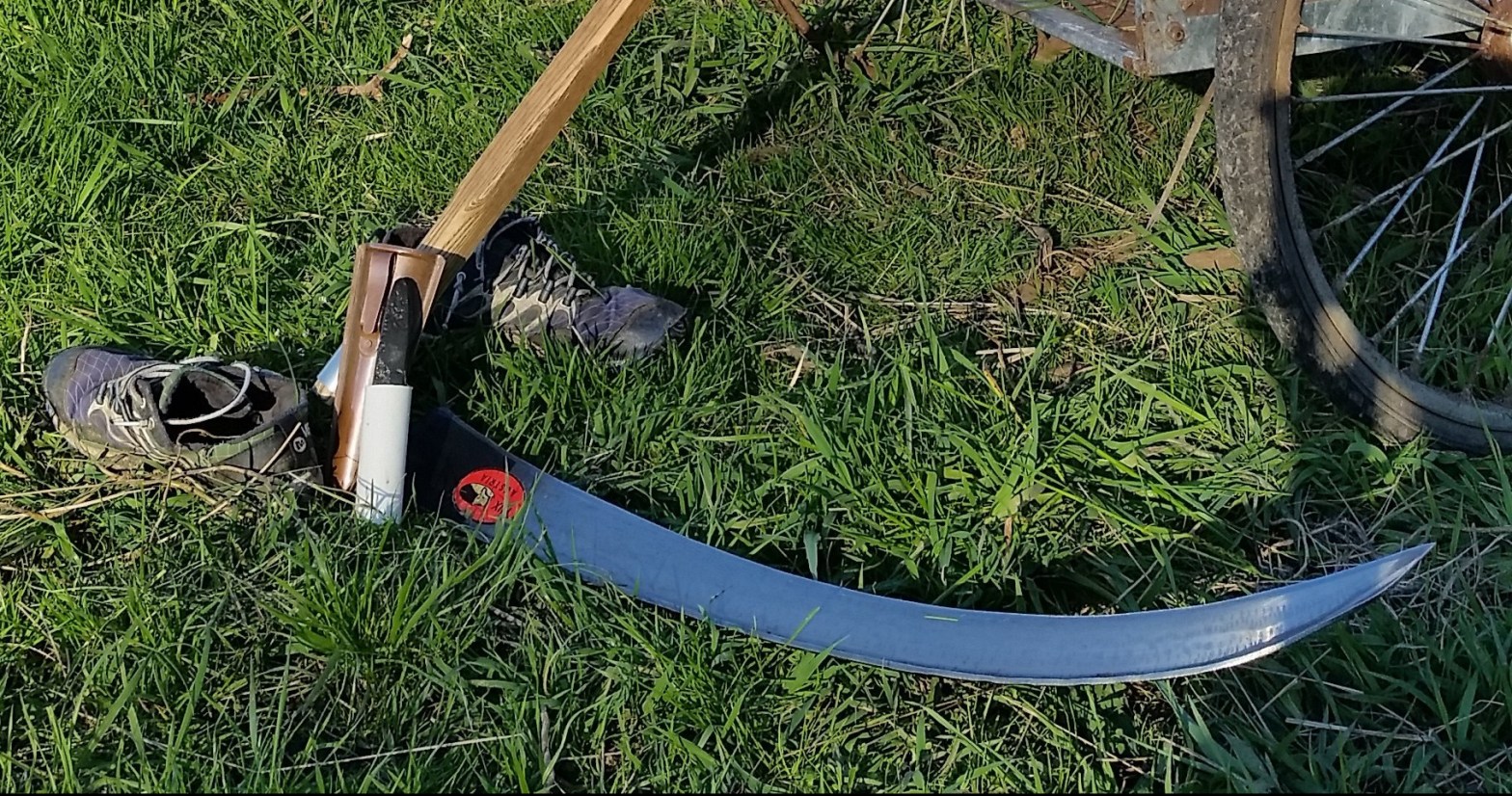
With a favorable forecast, a three day weekend, and hip-high grass in the pasture, it was time to make some hay. I got home from an 11 hour workday Thursday and busied myself peening the 85cm (33″+) scythe blade I’ve dubbed the haymaker. Peening is the process of hitting the very edge between a hammer and anvil in order to thin it enough that it will take and keep honing (sharpening) in the field while cutting. I’ve quickly come to know that this is a crucial part of scything with European blades as otherwise it is simply too much work, or worse, it just doesn’t work at all.

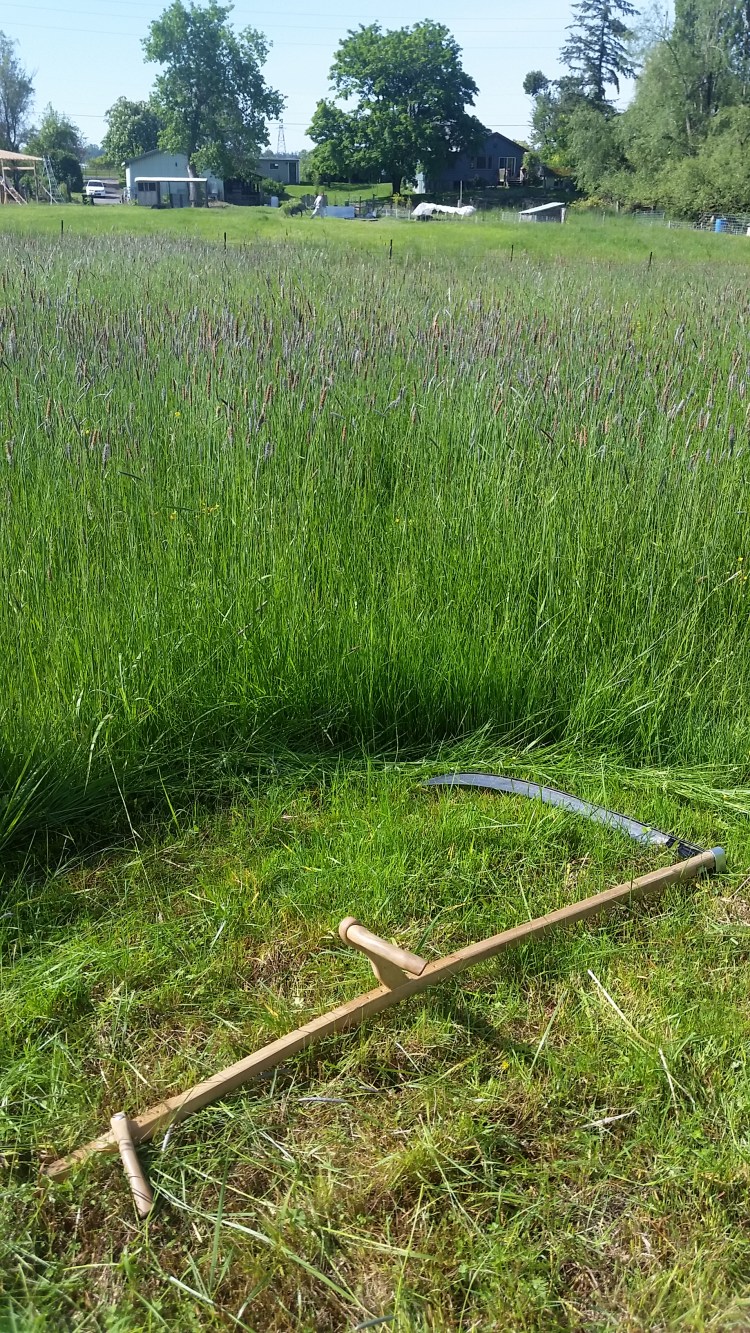
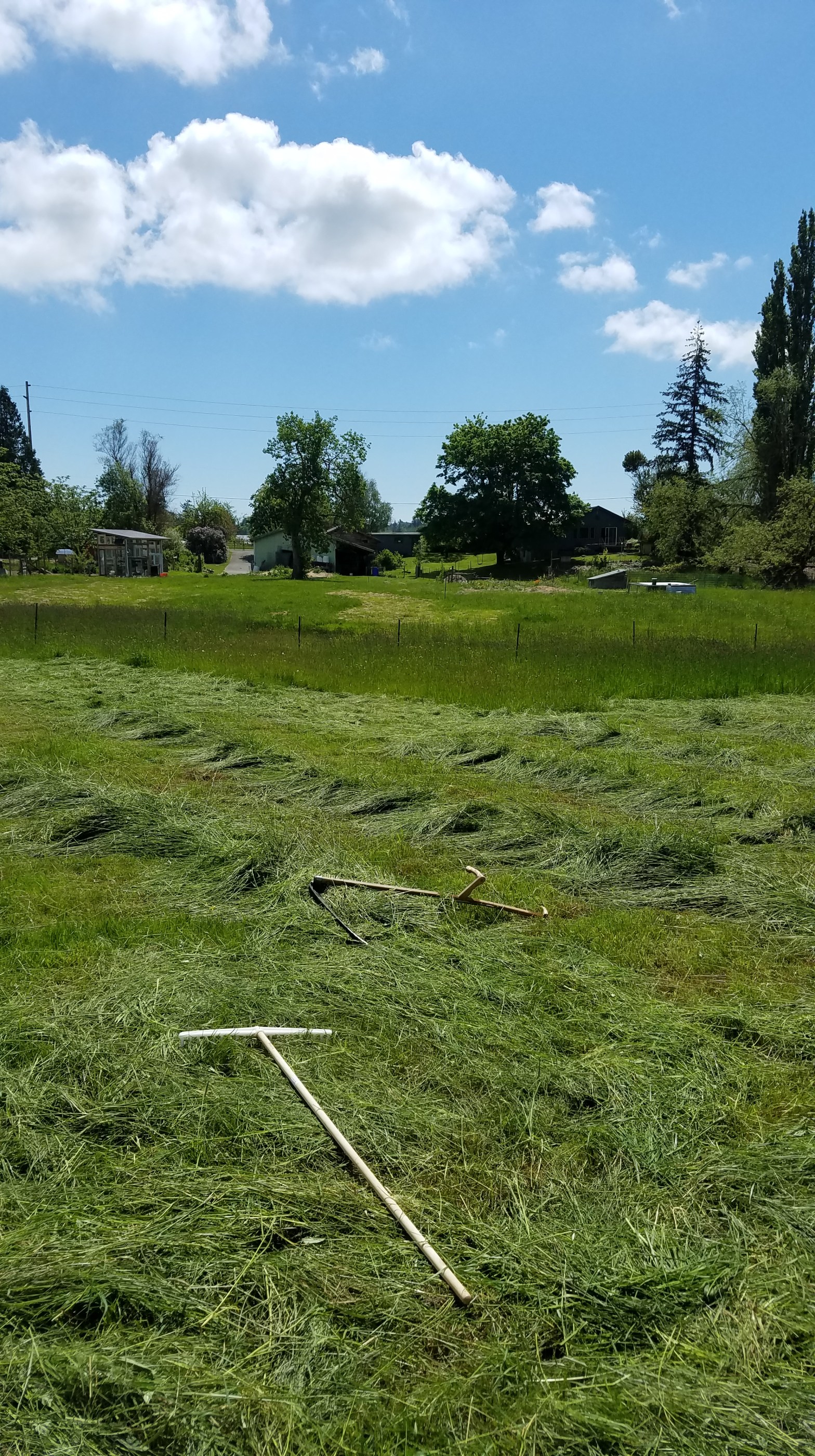
Grass is best cut in the morning dew as it is more tender. So, after Friday morning chores and good strong coffee with heavy cream, I set out to the field with scythe and whetstone. First order of business was scoping how I wanted the windrows to line up, more or less. When cutting, the material is naturally laid down to the left of the mower and as they advance, it creates a line, or windrow. And then another…and another.

20180511_123318.jpg

As you can see, each row took me 9 or 10 minutes. Some areas were tougher than others depending on type of grass or unevenness of terrain. Overall, the cutting was totally manageable and compared to last year, I had plenty of energy left to start tedding.

20180511_153231_001.jpgTedding is the process of spreading and turning the hay in order to allow air and sun to dry it. If not fully dried, there is a risk of spontaneous combustion! Not wishing the barn to burn down, I spread it out far and wide, probably above and beyond the call of duty. But again, the barn. Saturday, I tedded some more making sure any buried green clumps were fully separated and exposed. All weekend it was 70’s and sunny with a light breeze. 20180513_171706.jpgSunday after letting the dew dry, we began raking the now dry hay into rows. Gwen was able to push the rows into large piles. We drove the truck to the field and loaded it with one person forking from below, and one person tucking, spreading, stomping, and knitting the load together with a hay fork. 20180513_183428.jpg
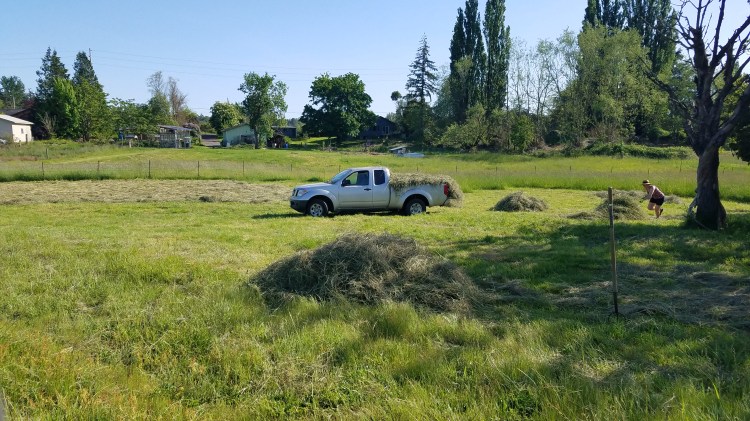
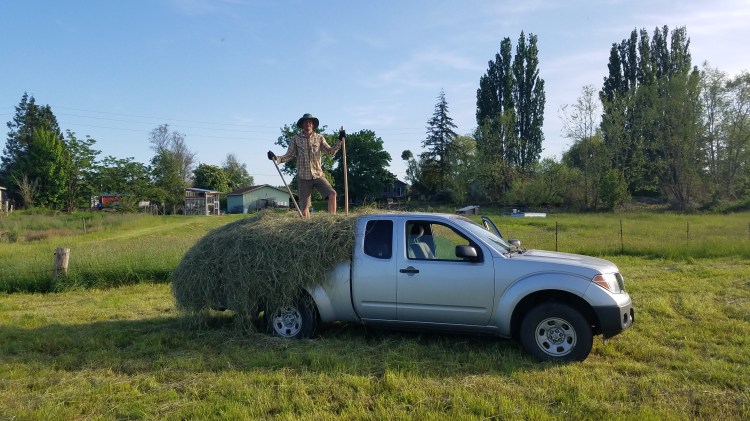
You can read all about how we bailed hay by cramming it into a garbage can last year here. While the results were successful, they were also a pain in the neck. This year we decided to forgo the twine and store it loosely. We chose a newly built stall that was designed to house the sheep we never got. So, I built a floor and we stuffed it to the gills. Well, actually the two truckloads only filled the stall about half way. But, we ended up with 210 square feet out of the weekend. Perhaps enough to last half the winter, depending on how many pigs are on board. The hay will be bedding, feed, and mulch.


Spring projects: piglets and kitchen remodel

We’ve been quiet in Blogville, but it’s not because nothing is happening. SO MUCH is happening. We’re starting our second spring at Bellfern, and–dare I say it?–it feels like we’ve got our feet under us. Our disasters are fewer and farther between.

The Farm Update

In early April, we castrated the piglets, and yes we learned how to do it from YouTube. We decided not to take photos and video, because the video we learned from is so great I’d rather you watched it (if you want to watch piglets getting castrated):

I thought I’d have a hilarious “I’m-a-farmer-now” blog post out of that event, but really it was such a non-event that I don’t have much to say about it. It went down exactly like the YouTube video, and it was over in 15 minutes. My intrepid friend Audrey came over and held the piglets, because Josh can be squeamish when animals are in distress, which is really a wonderful and human sort of trait, and I wasn’t sure if he could power through. He was fine, and he promised to be a full participant next time we have to do it. So, piglet castration. Check.

Progress on the House

Although we write most of our farm updates about the farm, we actually live in a house. A house that was built in 1916. Like most houses built a century ago, you can see glimpses of different eras and the families who once lived here.

The kitchen is a space that was designed and much loved by the previous family who lived here, and I love that they loved it. They’re great people. But it was top of my list of rooms to do over. My dad came in early April to help us check off this particular wishlist item.

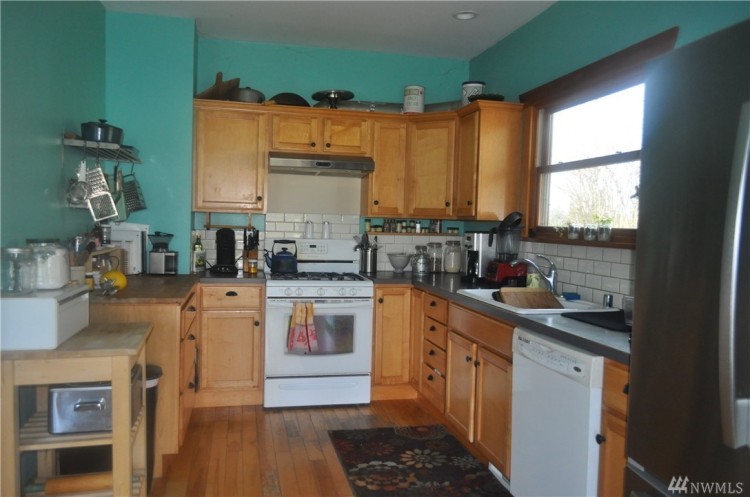
This is what the kitchen looked like when we moved in:

old kitchen.jpg
Gasp. So much turquoise and honey wood tone.

It was dark; 2 little can lights lit the whole kitchen. The cabinets, finished in a “natural” tone that was super popular in the late 90s, were about 15 years old, and the finish was disintegrating where years of greasy fingers had touched them. The appliances were delaminating around the controls. The cabinets stopped 3 feet short of the east wall, for no clear reason, and we filled the space with a roll-in cart. It was turquoise.

We replaced the appliances just a couple of months after we moved in–since I spend many hours cooking and processing food in the kitchen, that upgrade was urgent. Next most urgent was the turquoise paint job, which my mom helped me conceal with Sherwin Williams Westchester Gray last fall.

During this most recent phase of the do-over, Dad and Josh started by knocking out the wall between the dining room and the kitchen and raising the height of the entry.

Dad rewired the lights and added some new pendant lights to hang over the planned breakfast counter, attached to the back of a new cabinet.

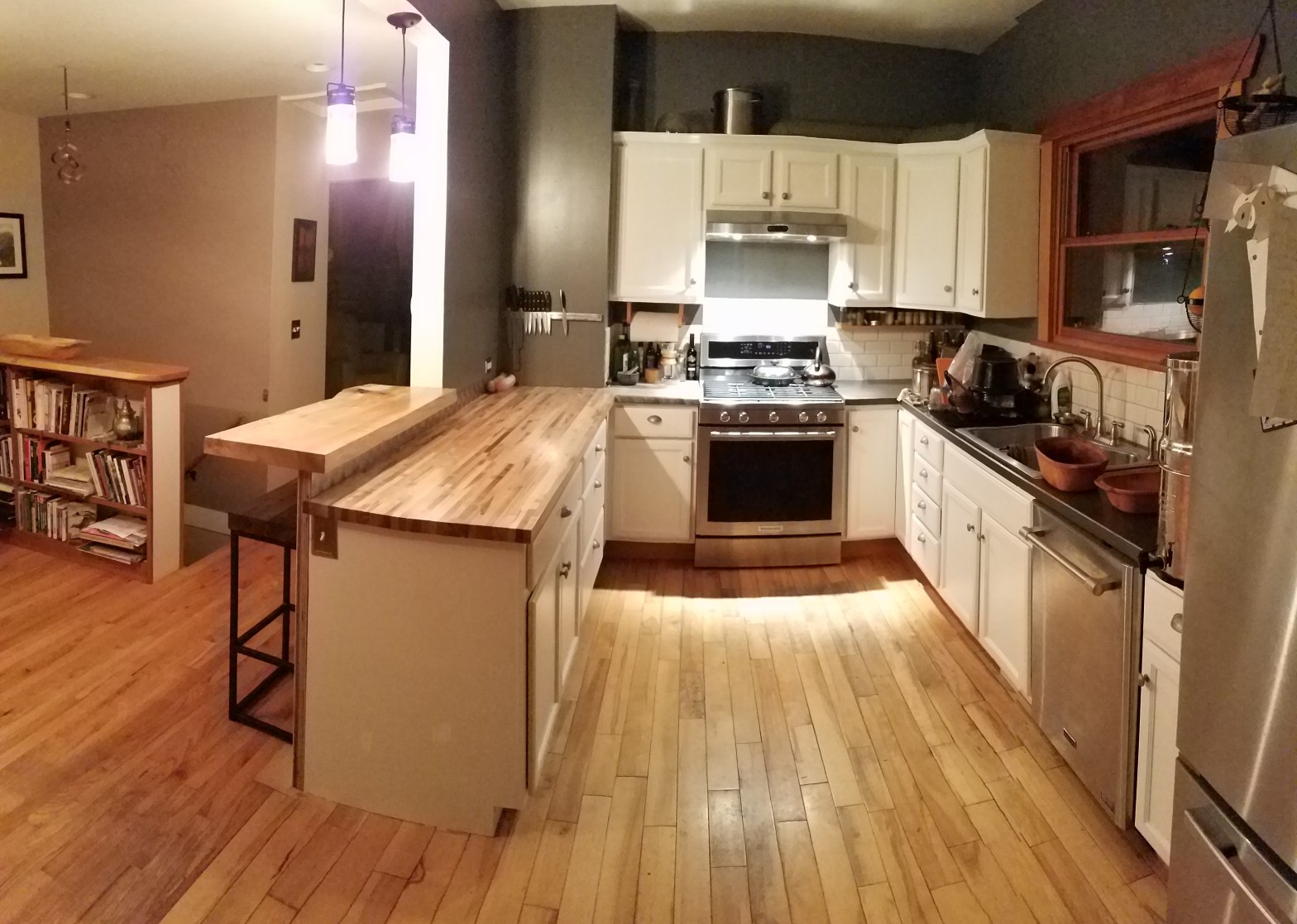
We added a new butcherblock countertop, a stick-on aluminum tile backsplash, and a live-edge maple slab at breakfast-counter height.

I took down all of the cabinet faces, sanded, and painted them, which seems like a minor detail when compared to wall removal, but it took nearly 10 days of prep and spraying, and I’d like some credit, too, please.

refinished cabinets.jpg

Now that it’s reassembled, the kitchen is glorious. We eat nearly every meal at the maple slab breakfast counter, and the full-size dining room table where we used to eat is slowly being buried by tools and unopened mail, like a normal family.

new kitchen.jpg

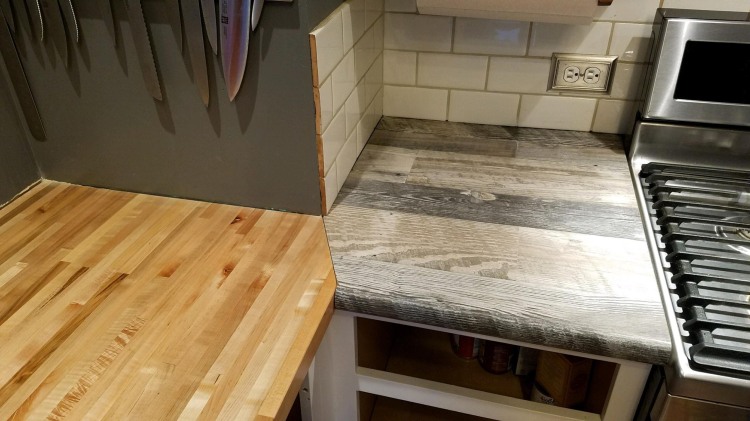
The kitchen is still not finished; we managed to install a small piece of the new countertop, but it was a huge bother, and Josh decreed that no further kitchen work would be done until it starts raining again in October, so we’re stalled for now. Here’s a glimpse of the new countertop that will one day fill the whole west wall:

2018041495183139.jpg

After the new counter is fully installed, there’s new flooring to put in, plus some trimwork and tiling, and…

You know how it goes. It may never be completely done, but it feels good to pay some attention to the house for a change. It often takes a back seat to farm animals, vegetables, fruit, and drainage projects.

Big day in pigletville

The piglets are 10 days old today. They’ve grown a lot since their birthday, and they’re beginning to fill out. Honeybunny continues to be an excellent momma. We’re so impressed with her.

Today was was a big day for the piglets. They had 3 big milestones:

  1. Most of them ventured out of the farrowing hut for the very first time. They followed mom out into the sunshine to see what she was doing out there, and discovered a very big world.
  2. They tasted their first solid food. In another week and a half, they should be regularly eating solid food when mom does, which includes a soaked mash of alfalfa and grain. But they’ll still supplement with mom’s milk for at least 2 months.
  3. Two flopped over and let me pet their bellies. Although I handle them everyday, they’ve been wary of me from the minute they wriggled out of mom. But once a pig recognizes a human as the source of food and belly pets, you’re “in.”

It’s a boy! And a boy, and a boy, and a boy, and a girl, and a boy, and a boy, and a girl, and a boy, and a girl

Shortly after it became apparent that Hypatia was going to become the matriarch pig of Bellfern Homestead instead of Eliza as intended, her name morphed into Honeybunny. Hypatia seemed an appropriate name for a creature too smart for her earthly form who was destined for an unfortunate end, but Honeybunny seems more fitting for a mistress.

Pigs have a gestation period of 114 days, which is easy to remember with the addage “3 months, 3 weeks, and 3 days.” Honeybunny’s due date was last Wednesday, but she wasn’t showing any signs of imminent farrowing (the pig-specific word for birth), which include lactation and nest-making. Finally, mid-day on day 117, she had a snack of cottage cheese and then immediately went to work moving all of the hay in her hut into a giant mound. She was moving that hay with a purpose, and we knew we were finally starting the countdown.

Nest-making usually happens within 12-24 hours of birth, so when this behavior started at 3 p.m., we thought we’d be looking at an early-morning farrowing the following day. We had a nice corned beef dinner to celebrate St. Patrick’s Day, and went out to check on her after cleaning up. To our great surprise, we found her in active labor. We could see the muscles around her vulva contracting, while she laid on her side in a trance-like state. I headed back into the house to get a bucket of hot water, soap and a towel (at the good advice of James Herriott). In the time it took me to walk back to the house, our neighbor came running over to let me know the first one was out!

20180317_201147.jpg

Pigs usually birth one pig every 10-15 minutes, so Josh and I settled in the corner of her hut, whispered encouragements, and tried to generally stay out of her way and not distract her. But then 20 minutes passed, and another 20, and I started to get concerned. One hour between piglets is the signpost for a problem. If you pass the one hour mark, and you know there should be more pigs coming, then it’s a sign of distress. At one hour and 5 minutes, I soaped up, rinsed, then thoroughly lubed my hand and arm and went in. (She wasn’t crazy about this, but wasn’t as upset as you might expect.) I was expecting to find a big fat piglet stuck just behind her pelvic bone (they were 4 days late, after all), but to my relief, I couldn’t feel anything. So I withdrew, rinsed off, and 3 minutes later a great big boarlet popped out.

From then on, the rest came in intervals of 1 to 10 minutes, and in the course of a 2 hour farrowing, we had 10 wriggling piglets! They were all born without problems, and none of them required our intervention. Nonetheless, we did vigorously rub each one and relocate to a heat lamp until mom was done to avoid getting crushed. She occasionally got up between births to gulp down water and rebuild her nest, but she wasn’t very aware of what was going on around her.

After piglet 10, she seemed to calm a little, so we brought the piglets back to let them suckle. The mom produces colostrum for the first 24 hours, so it was crucial to get them nursing as soon as possible. I was concerned she would freak out about these parasitic creatures latching onto her, but I might have been projecting my own fears. She was unphased, and they all latched on and nursed themselves to sleep.

Although the whole event was over by 11 p.m., we were concerned about the piglets getting crushed in the night by an enormous and exhausted mama, so Josh and I took turns getting up every 2 hours to check on them. Twice during the night we pulled the piglets off moma’s teats and stuck them back under the heat lamp, and she seemed to really appreciate the opportunity to get up, drink water, and relieve herself without having to worry about accidentally stepping on them.

We’re not out of the woods yet; one of the 10 is very tiny and might not survive. And accidental crushings are very common in the weeks following birth. But it’s a promising start! All of my fears about problem births and the piglets being rejected by the moma have not come to pass.

If you’re the curious sort who wonders what a pig farrowing looks like, I managed to get a bit of graphic video of her last two piglets entering the world.

The scythe; it really ties the farm together.

Have you seen the Big Lebowski? The Dude, hopelessly adrift, finds purpose and grand adventure in recovering a stolen rug that was the keystone of his humble abode. That’s how I feel about the scythe on the farm. Like, The Dude’s feng shui, the farm’s flow is totally blocked without it.

How strange that the scythe became the tool of choice for that dark-robed empty-faced personification of death itself, the grim reaper. It is true that the steely device can be used to extinguish (annual weeds, for example) and harvest (wheat), but I can’t think of another piece of technology that is as efficient at redistributing resources on the landscape, encouraging fertility, and therefore life.

20170521_094337.jpgI am no expert on the history and variations of this tool throughout agricultural regions. Those wonderful geeks are accessible with a quick internet search. I am not even close to mastering its full usage and maintainence. But, in the past year and a half I have become very, very functional.

I can use the scythe to clear tall vegetation, even blackberry and thistle, away from electric wire. I can cut a quarter acre of hay in a morning (starting a bit before dawn when the grass is dewy). I can mow clover and cart it over to the livestock for a   breakfast salad before I leave for the day job. I can harvest a truckload of rush and reed for garden mulch mid-winter in about an hour. I’ve even seen a video of a scythe wielder trimming fir saplings.20170524_123703The smoke-belching, toe-severing, clog-prone riding mower frequently takes a backseat to swooshing swaths at our homestead. Of course, there is a time and a place for machinery. A string trimmer does a better job right up against wire fence, a narrow space, or rocky ground. Our 4′ wide Husquvarna mower is considerably quicker on the flats, but the byproduct is a pulpy mass that isn’t good for much other than compost.
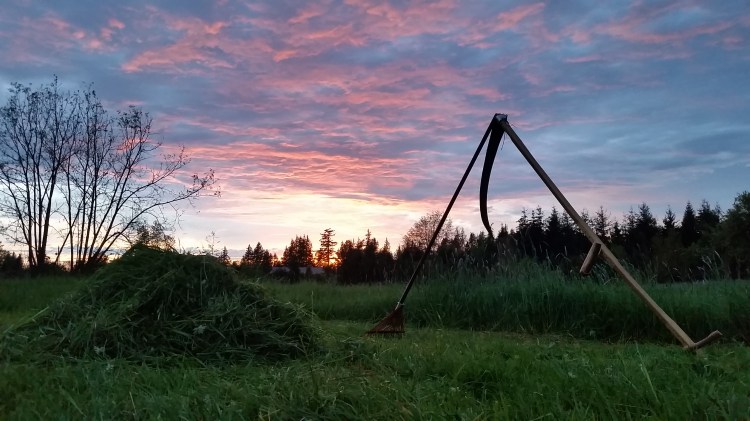
The key to the scythe’s efficiency is in how thin and sharp one can get and keep the edge. This takes a process of peening and honing that I won’t get into here. Also, important is technique. “Keep it on the ground and bring it around,” is a good mantra to repeat. The cutting happens by slicing, not chopping and an arc of motion is best to achieve ease. It is a full body movement, not unlike tai chi, that is energizing rather than depleting when done right. 20170828_145108.jpg

The wildlife also stand a better chance at survival when the scythe is implemented. Insects, spiders, frogs, snakes, etc. Gwen is still traumatized about mowing over a nest of baby rabbits the first weekend on the homestead (she grew up with a bunny as a pet). The scythe also allows for selecting which plants or young trees you want to keep rather than decapitate. Just back the blade up to the desirable and pull away.

For peace and quiet. For simplicity and elegance. For harvest and management. For independence and interdependence. The scythe will remain the most used and most loved tool on our farm, connecting all the various systems (water, soil, crops, livestock, pasture, human, wild) together.  20170504_203457.jpg


Upgrading the mighty 5 gallon bucket

I spent many years working landscape construction specializing in steep slope installations and other sites with difficult or delicate access. Sites where an excavator or other heavy equipment could not/should not go, Some places where even a wheel barrow would be too cumbersome. On a couple jobs we used a military surplus medic stretcher to haul stone up a hillside, but ever present and ever useful was the 5 gallon bucket.

Such a simple tool that holds gravel, water, soil, feed, and even, more tools. When loaded bilaterally (think “farmer carry” in exercise-land, or just a farmer carrying stuff on farmland), you can move a ton of material. Literally. If a gallon of wet concrete weighs ~ 20 lbs, then one ten gallon load is 200 lbs. You’d only need to make ten trips to move said ton. Perhaps with a couple breaks!

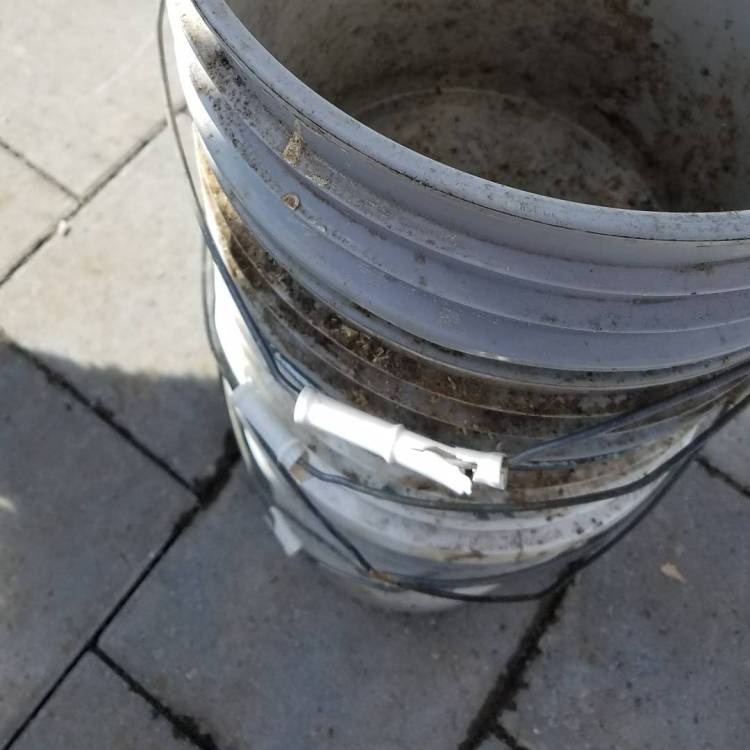
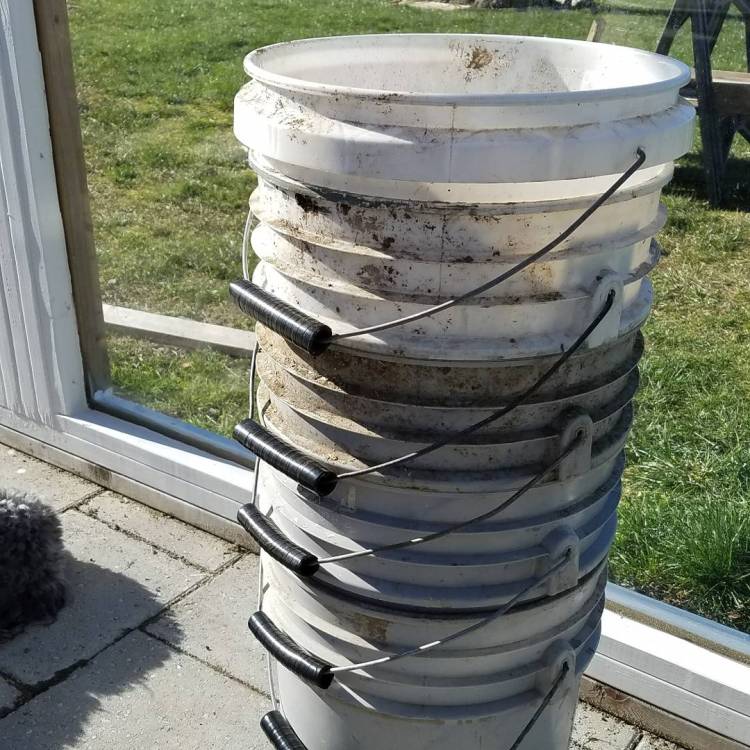
Inevitably, however, one piece of the overall elegant design fails. And that would be the cheap white plastic handle that gets brittle and breaks off until you are left with only one or two fingers protected from the skin-gouging wire underneath.

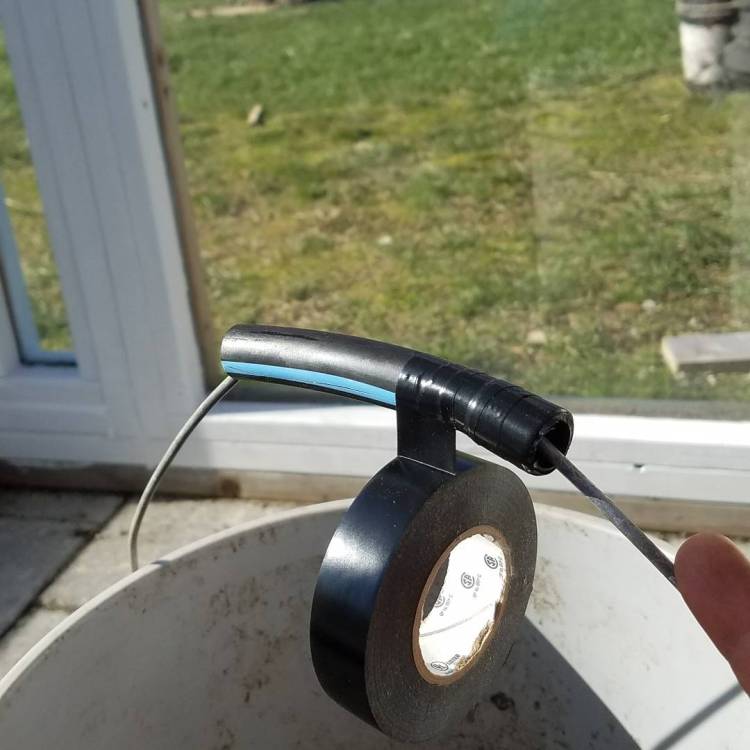
Our crew used to install irrigation systems and at the emitter end, we would use a tail of “funny pipe” (flexible 1/2 inch pipe) that allowed us to bypass any funny angles required by rigid pipe. Turns out this makes a perfect handle replacement when coupled with electrical tape. You can also use old garden hose, although you may wish to apply extra tape to stiffen it up.

The steps are simple:

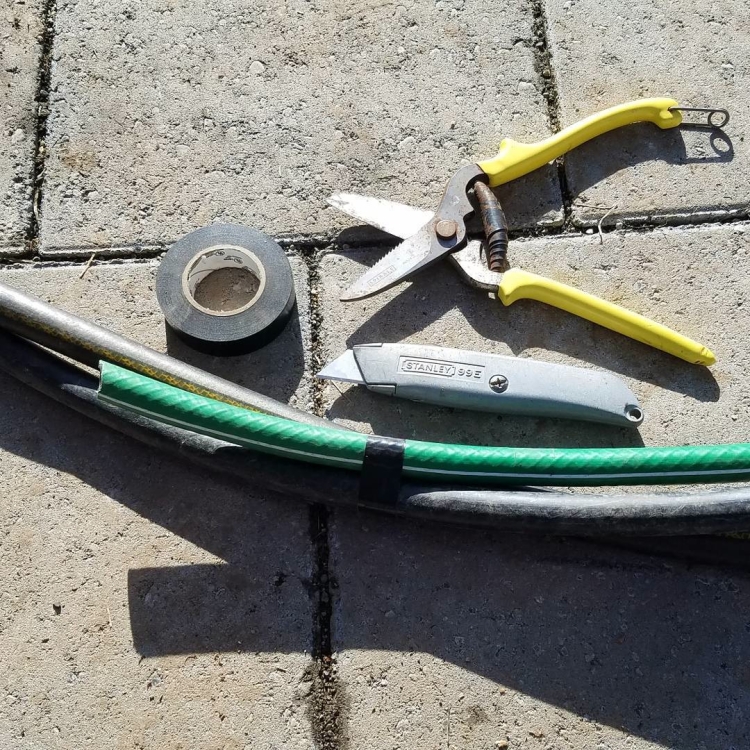
  1. Gather tools and materials.IMG_20180218_140500_723.jpg
  2. Snip off remaining ring of old handle, or just move it aside.IMG_20180218_140500_728.jpg
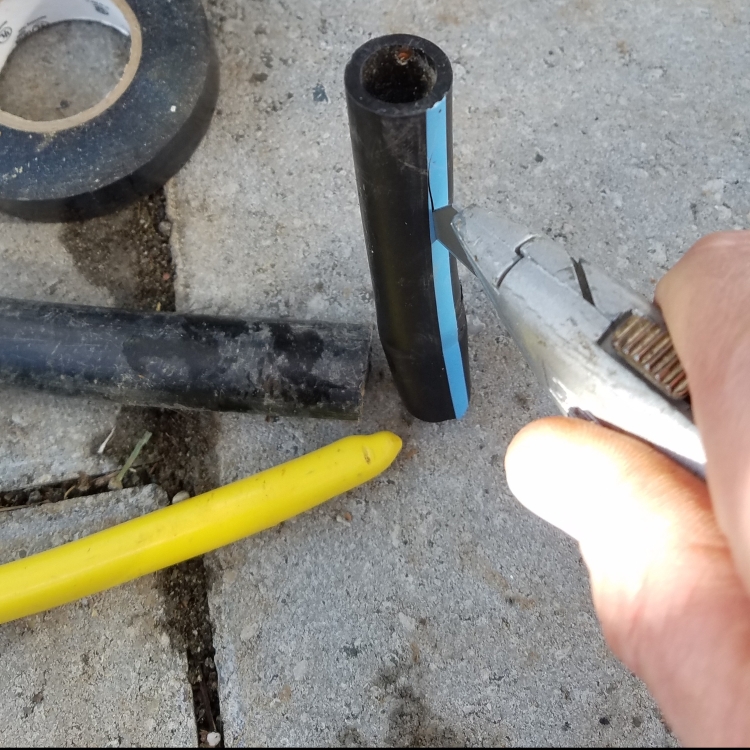
  3. Cut a piece of pipe/hose the length of the flat part of wire handle.
  4. Take a new utility blade or sharp knife and slit the length.20180218_132545.jpg
  5. Work it onto the wire.
  6. Wrap with electrical tape.IMG_20180218_140500_725.jpg

Voilá! Better than new. The new handle is more comfortable/ergonomic and will easily outlast the bucket itself. Now keep your eye out for buckets along the side of the road like I always do and increase your collection. Farm on!IMG_20180218_140500_722.jpg

Pork: the other red meat

In the 1970s, a short-term study was conducted, whereby a small group of people was fed a limited high-fat diet, and an increase in blood cholesterol was observed. Before any long-term studies could be conducted, nutrition science, a relatively new field, took that news and ran with it. Official “Dietary Guidelines for Americans” were announced, proposing that we should increase our carbohydrate intake (think of that big brown bottom of the 1980s food pyramid, full of bread, oatmeal, and pasta), and decrease our intake of meat, salt, and fat in general (1).

The low-fat craze took off in the 1980s, with store shelves full of fat-free yogurts, cheeses, milk, peanut butter, candy, all pumped full of chemicals and sugar to give these foodlike items a texture and taste that resembles the food they once were.

The meat industry, suddenly the villain of “healthy nutrition,” suffered. Beef and pork sales plunged, although massive factory chicken operations ramped up to meet new demand for individually wrapped chicken breasts.

The pork industry, concerned for its future, came up with a clever response. Rather than hemming and hawing and hoping America would come back to its bacon roots, they bred pigs that were muscular and lean, and produced light-colored meat that they cleverly marketed as “the other white meat” to distinguish pork from that unfortunate red meat beef product.

America seemed to appreciate this gesture, because pork quickly regained popularity, and massive concentrated animal feeding operations (CAFOs) sprang up to meet demand. (Not coincidentally, it was around this time that that people who raised hogs transitioned from “farmers” to “swine technicians.”) America was comforted that they could buy a fatless pork chop and their cholesterol would remain low, their hearts unclogged. Nevermind that this new lean pork was leathery tough, tasteless, and dry. America wasn’t paying that much attention to taste at the time, an unfortunate side effect of the fat-free movement (that paved the way for the pendulum to swing the other direction into the modern foodie movement, but that’s probably a different post).

Since you live in the modern world, you likely have the benefit of knowing the punchline of this unfortunate nutritional joke. The link between animal fat, blood cholesterol, and heart disease was never proven in successive studies (1, 2, 3, 4). On the contrary, after 3 decades of campaigns and advertisements pushing a low-fat diet, heart disease remains one of the highest health risks for Americans. The needle hasn’t even budged.

In fact, according to the former president of the American College of Cardiology, Sylvan Lee Weinberg (5)

The low-fat, high-carbohydrate diet… may well have played an unintended role in the current epidemics of obesity, lipid abnormalities, type 2 diabetes, and metabolic syndromes.

Modern nutrition science is slowly starting to correct the record, though this time around there’s no catchy government-funded campaign to help retell the nutritional story. The result is a patchy adoption of new nutritional knowledge layered on top of old knowledge, and dozens of diets, from raw to vegan to paleo to those who persist with low fat, all claiming (accurately, depending on the date on that research paper) to be the healthiest science-based diet.

A couple of weeks ago, pork fat (which is near and dear to my heart) received some positive publicity in the mainstream media for probably the first time in my life. A BBC article (6) published a list of the “100 Healthiest Foods” based on a 2015 article published in PloS One (7), and according to the researchers’ criteria for “nutritional fitness,” pork fat is #8 out of 100. 

sausage chunks

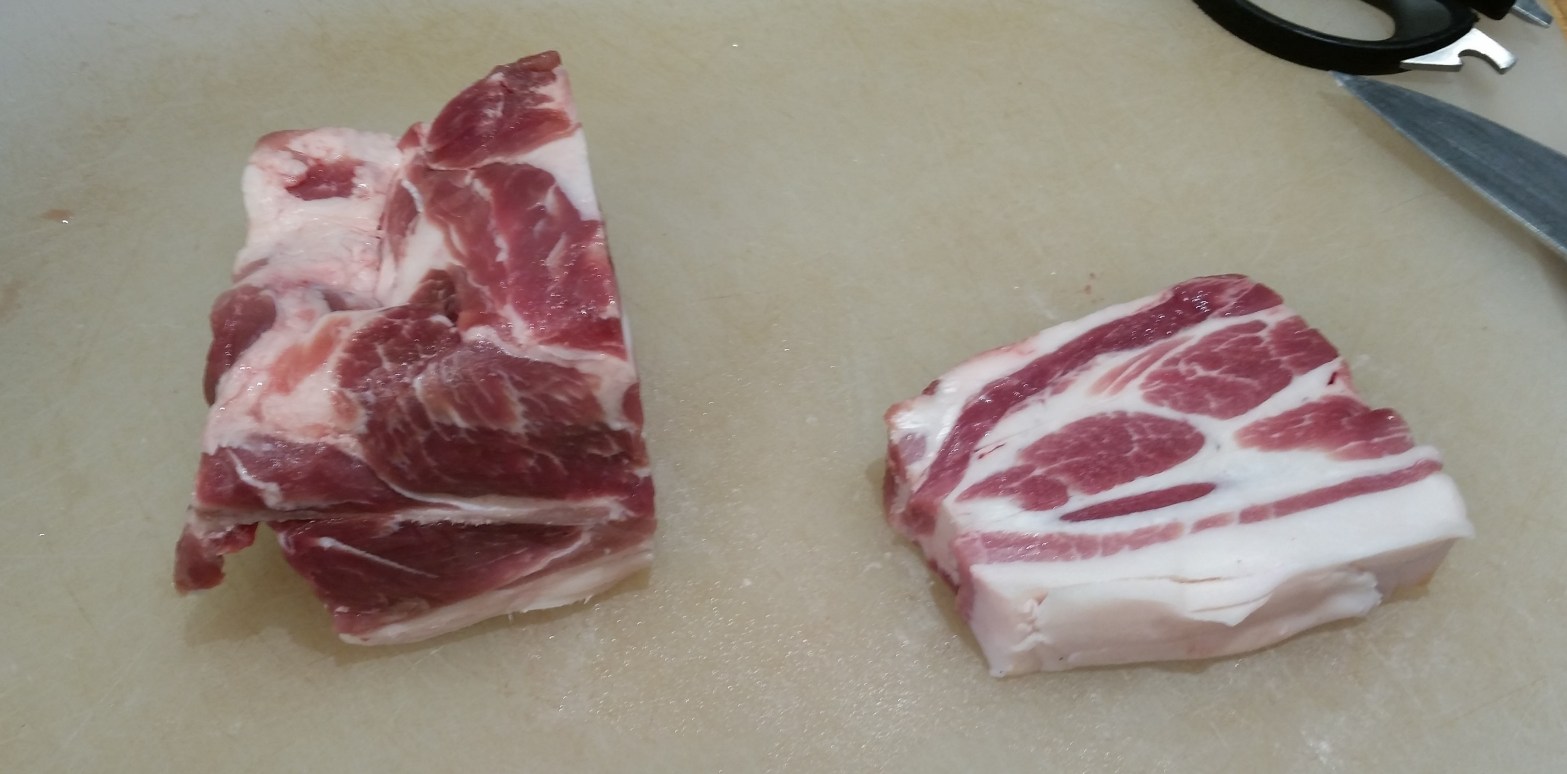
Fortunately for Bellfern Homestead, we grow a breed of hog that still has fat! Lots of it. American Guinea Hog (AGH) is a heritage breed known for its thick layer of fat, because they’re a lard pig. These pigs thrive in a pasture and in the woods, where they forage for grass, nuts, tubers, rodents, snakes, and grubs. This high-protein and grass-fed diet significantly affects the nutritional profile of the fat: pastured pork is high in Omega-3 fatty acids, known to actually decrease cholesterol. The nutritional makeup of pastured pork fat is significantly different than pork fat from corn-fed pigs raised in CAFOs (8, 9).

Heritage pastured pork [and AGH isn’t the only fantastic heritage breed out there (10)] is finally becoming accessible to most of America. Although you won’t find it in a supermarket, there are thousands of small farmers, like us, who are passionate about these animals, their health, their importance to our diets, and preserving the breed. A Google search can pretty quickly help you find one.

This blog post contains a lot of reference links, but in conversations over the years, I’ve found that my “in defense of fat” topic is surprisingly polarizing, and I’m fighting an uphill battle convincing our pork customers not to trim the fat off their pork chops. I wanted to include enough links so that people who care about source data (and everyone should) can find it.

8 Reasons to Buy Heritage Pork Despite the Higher Price Tag

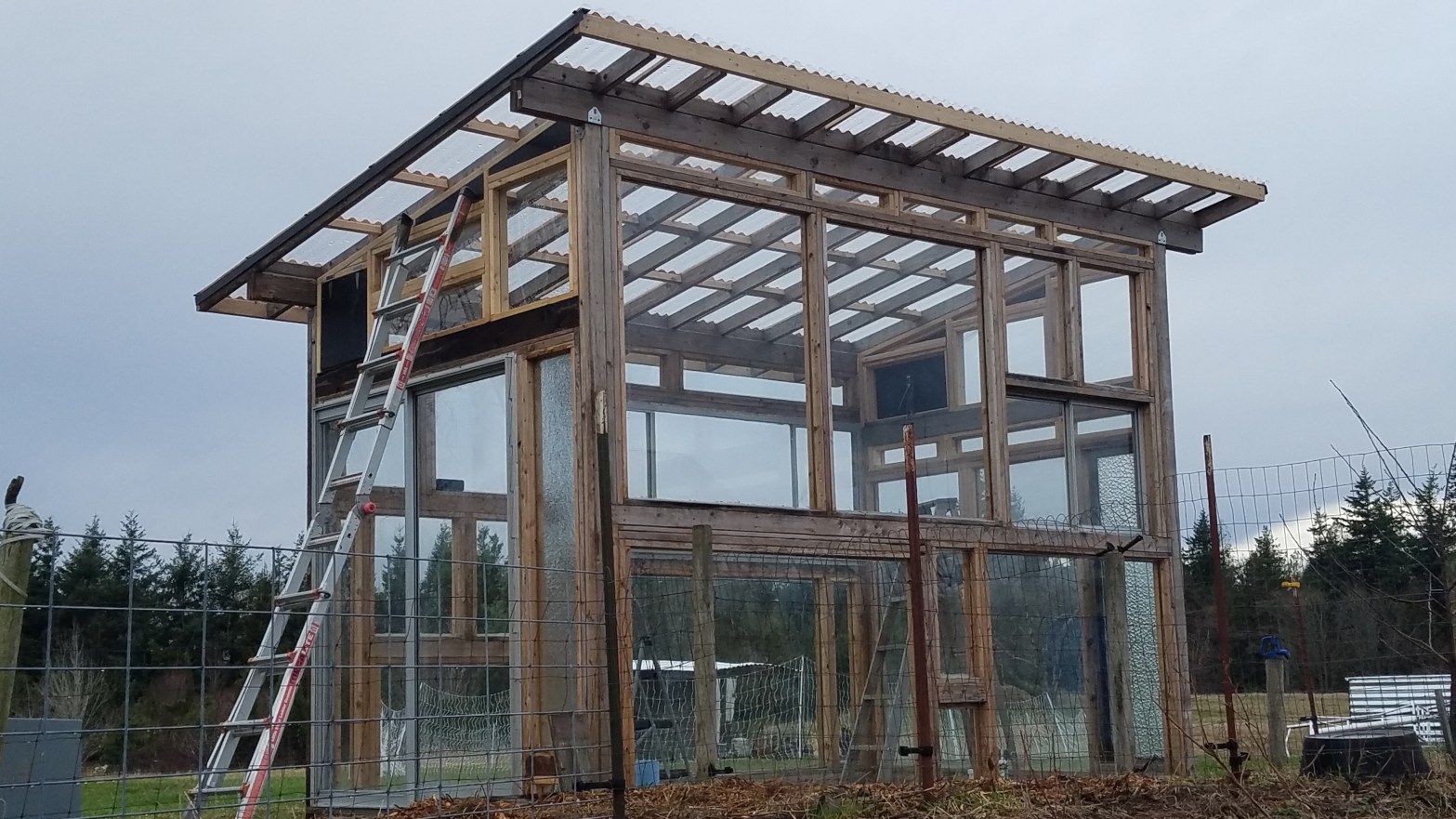
DIY greenhouse; 11 months in the making.

It really is a load off my shoulders and mind. All the design deliberations, cost considerations, material requisitions, and top-of-ladder installations…done. Done, done, DONE! Well, there’s still caulking, painting, and power to run, but that’s pretty mindless…


…point is, no more big decisions!

Geoff Lawton, of Permaculture Research Institute, says a design is made more elegant with the addition of restrictions. For example, we had a pile of windows the last owners left, all of varying sizes. These guided the size and shape of the structure. The few oversized windows lent to a height that is taller than necessary, but leaves you with a feeling of being outdoors. A nice bonus especially when compared to plastic tunnels, or hoop houses, which feel claustrophobic to me.20180121_150451.jpg

Light, level ground, and water access were key for choosing the location. Traffic patterns too as it makes sense to put it where we are already going on a regular basis. At first I was worried about it being in the way and originally tucked it into a corner, but now I realize it is best for it to be on the way, instead. Like adjacent to a pig paddock, a road, and near the kitchen garden.

Our frequent massive winds also led me to feel justified in building it like a tank. Another design element is allowing features to serve multiple purposes. The window trim, for instance, was beefy enough to not only hold in the windows, but also add a significant structural element.

Our day jobs were yet another design driver. Since we are gone much of the time, it made sense to invest in some bimetal openers that simply operate on rising and falling temperature. IMG_20180119_195130_392.jpg

So, now we’ve got a transparent roomy room with automatic ventilation and a sliding glass door that works nicer than the one in our house. But, of course, the decisions never cease because now we have to sort out which tomatoes to grow!

Water, an abundantly scarce resource

The Thursday morning before Christmas, I got up to get ready for work and discovered that we had no running water. NOOOOOO!!!! I knew it was below freezing outside, and my first thought was that our pipes had frozen. But it wasn’t that cold. Why would they freeze now? I hadn’t had coffee yet, so my brain was muddled, and you need water to make coffee. The situation was dire.

I didn’t want to wake up Josh until I had an idea what was going on, because there’s nothing Josh hates more than plumbing problems. Really, nothing. If I woke him to tell him there was something wrong with our pipes his whole week would be ruined and he’d be a monster to live with. He was still steaming about a toilet problem that we had fixed months ago.

Fortunately we had a gallon of water in our Berkey purifier, so I could make the coffee and pull it together. Duly caffeinated, it then occurred to me to go outside and try the outdoor frost-free pumps, which are on a separate waterline from our house. If the pump had water, then I would know that the problem was isolated to the house (SO much of homesteading is a process of elimination). Flashlight in hand, I skated across our driveway to the closest pump by the pig paddock. Not a drop came out. We were completely without water.

Although this may sound like bad news, it was a huge relief, because it meant that whatever was going on was not our problem–at least not directly. We wouldn’t be calling a plumber on Christmas weekend. Hooray! Josh’s week was saved.

We get our water via a water association. There are some large wells just up the road that serve about 60 water shares via an enormous 12-inch water main. The association buys water from the city of Ferndale when the wells go dry in the summer. We are fortunate to own 2 water shares that came with our property. The downside is that it’s expensive–we pay more for water in the county than we did in town–but it’s also a very fortunate situation in our county where water access is a major problem.

There’s currently a moratorium on new wells on undeveloped property in Whatcom county until a study can be done to determine how many wells our water table can support. In theory, the caution is a good idea; land management is trying to make sure the county  isn’t developed more densely than the land can support. At the same time, this edict came down unilaterally and with little warning, so hundreds of properties that were purchased with the intention to build are now fairly useless to the owners, with values depreciating by 50% overnight. Many people bought land with loans that require them to put up a house within 2 years and are now sunk.

Which brings me back to our own mini-water crisis. The day before our taps ran dry it rained all day, a heavy steady rain, unceasing for 24 hours. That rain fell on already saturated soil, with a water table at or near the surface, so there was nowhere for the water to go but downhill. There’s a gentle little creek that runs through the back of our property that rises to 16 inches at its most raging. 100 yards downstream of our property, it runs through an enormous culvert ~6 ft. in diameter underneath a road and out the other side, where it continues on its gentle way to Bellingham Bay.

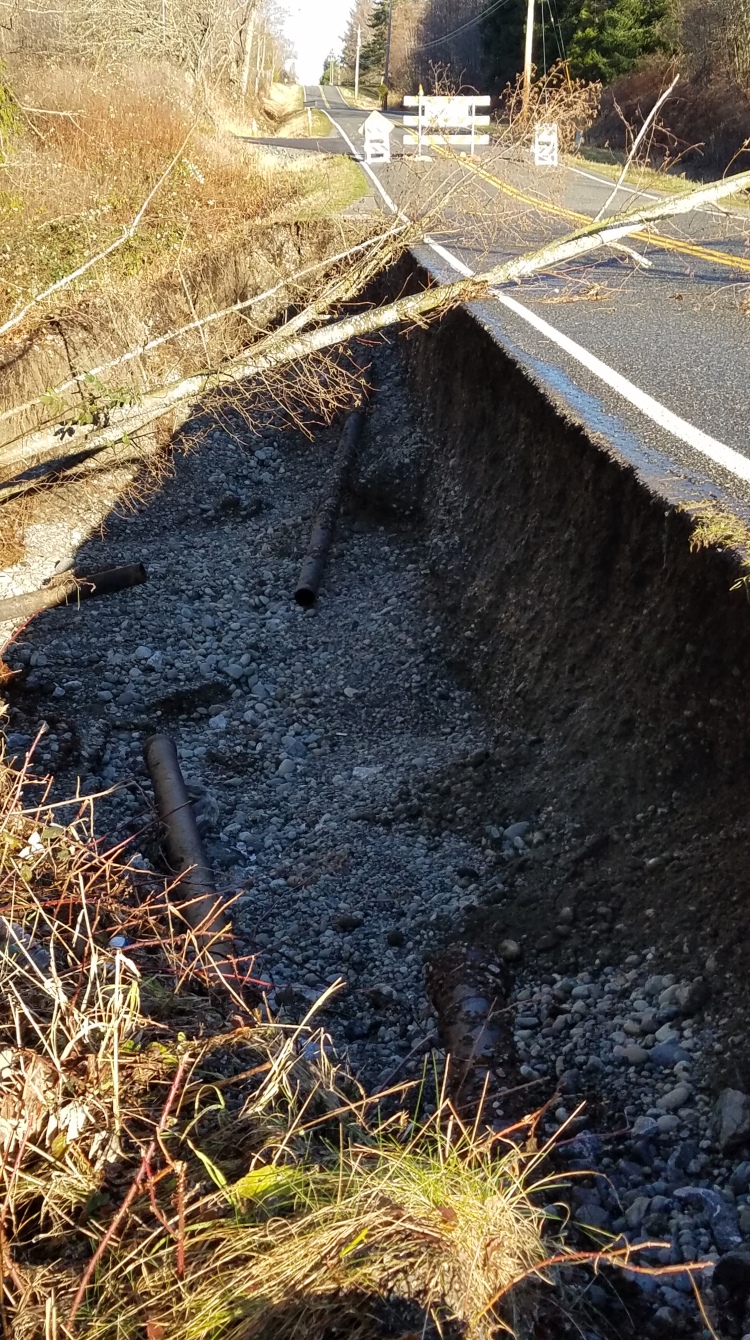
But something happened to partially block and crush the culvert–maybe a downed tree in a windstorm, which restricted the flow of water through it. That 24 hours of rain caused all of the properties bordering that gentle little creek to funnel water into it at a much faster rate than the damaged culvert could let it through. The road then acted as a dam, and water level rose, and rose, and rose, eventually cresting the road itself and running ferociously down the other side, where it washed away the gravel shoulder down, down down, at least 15 feet to where the water main for our water association was buried. The gravel bed supporting the pipes eroded away, and the pipe came apart.

Voilà. 60 homes without water.


20171220_105618.jpg
It’s hard to capture the scale here. That pipe is at least 12-inch diameter and a long way below the road.
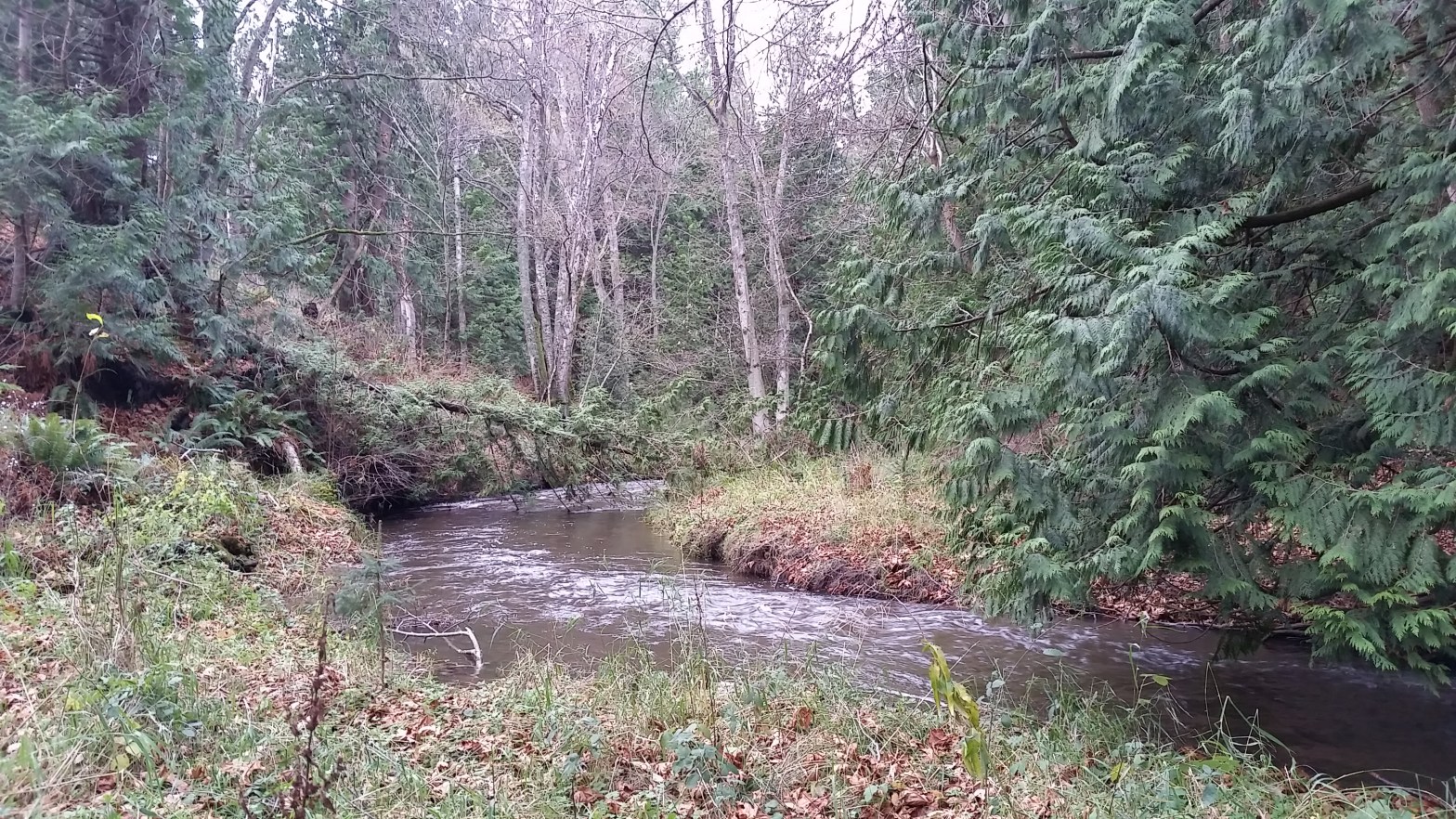
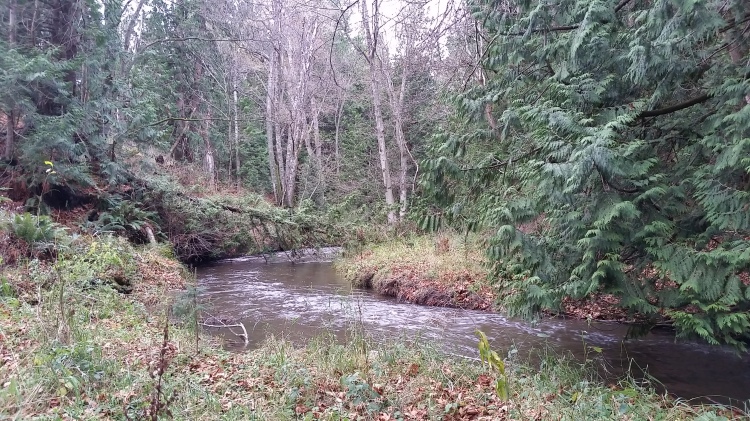
20171122_140249.jpg
This is how the creek normally looks in winter. It’s typically 16 inches deep during the rainy season.
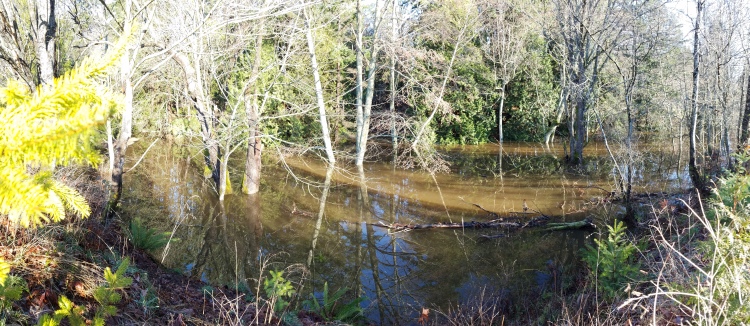
20171220_103948.jpg
Same creek, now 10 feet deep.

Josh pointed out the irony that an excess of water caused us to be without water. We live in one of the most reliably wet places in the United States, and yet there’s a lot of anxiety about water availability in our county. How did a county that gets 60 inches of rain a year get into this situation?

Our brief period without running taps has given me a lot to think about. If utilities become unreliable, do we have backup systems in place?

We don’t live off the grid, and we don’t aspire to live off the grid. But if the grid disappeared…well, that’s what preppers are prepping for, right? Once again, I’m noticing the thin line between the prepping mindset and the homesteading mindset. We’re now taking a mental inventory about our backup systems for water, heat, refrigeration, and fuel. Where can we implement reasonable redundancies? What is a rational level of caution?

Whack-A-Mole! Butternut the Cat Steps Up.

We are playing the long-term game here on the homestead. In a year and a half we’ve only planted 4 trees because well, the soil sucks and why stick sticks in the ground just to have them suffer? It takes time to build soil and that is what we are focusing on. Meanwhile, we expanded the annual garden in year two, because, YUM. Gradually, but surely, moles tunneled in to enjoy anything low-hanging or fallen. The garden did so well in the summer, that the loss was negligible. But then, in the fall, first the beets, then the carrots…ALL THE BEETS and ALL THE CARROTS…were decimated!

20170823_134154.jpgThe carrots were planted late and funnily, in a raised bed made up of my patented “mole mix“, so I wasn’t too disappointed. I mean, they did all the work tilling up that nice soil…so, I let bygones be bygones. But, the beets. I kept those babies moist during the heat of late summer allowing for excellent germination. I carefully cut back the crimson clover cover crop to give room and feed nitrogen into the soil. Then, they were all beheaded like some grim medieval tale. Argh!!!

Thankfully, carrots and beets are cheap food and our store was maxed with potatoes, squash, and oodles of canned goods anyways. The garden is way less soggy this winter, by the way, with all that new underground drainage system, so that’s a plus. Still things were getting out of hand and I was beginning to consider an external input. Something natural like castor oil is supposedly a mole deterrent and Gwen went and picked up some.

Well, its been frozen for a couple weeks, so spraying now doesn’t make much sense. Whatever to do? Well, Masanobu Fukuoka, author of One Straw Revolution, and natural farmer, would ask, “What can I do less of?” Meaning, “Where can I save my own energy and align more with the patterns of nature?”

20171226_151326.jpg

Nature seeks a balance. When one side of the scale is tipped, it sends in a force to either subtract on that side, or add on the other. What we need is a predator for the pest. But, our cat has previously been a staunch pacifist. She’s only killed one bird in 12 years. And that was probably because it was bothering her nap time.

The last few days, however, she has been stalking, hovering and pouncing the many openings to the above world. I saw her get two moles today alone. And this evening she’s been strutting around with a newfound air of confidence. It may not guarantee a full root crop harvest next year, but it is one example of how our pets can be a part of nature if we let them and how we are too when we observe and interact with it.

Regardless, I will continue to harvest seed starter and enjoy dryer spring garden conditions all thanks to the mole-scaping. And, of course, sing the praises of Butternut the Cat!