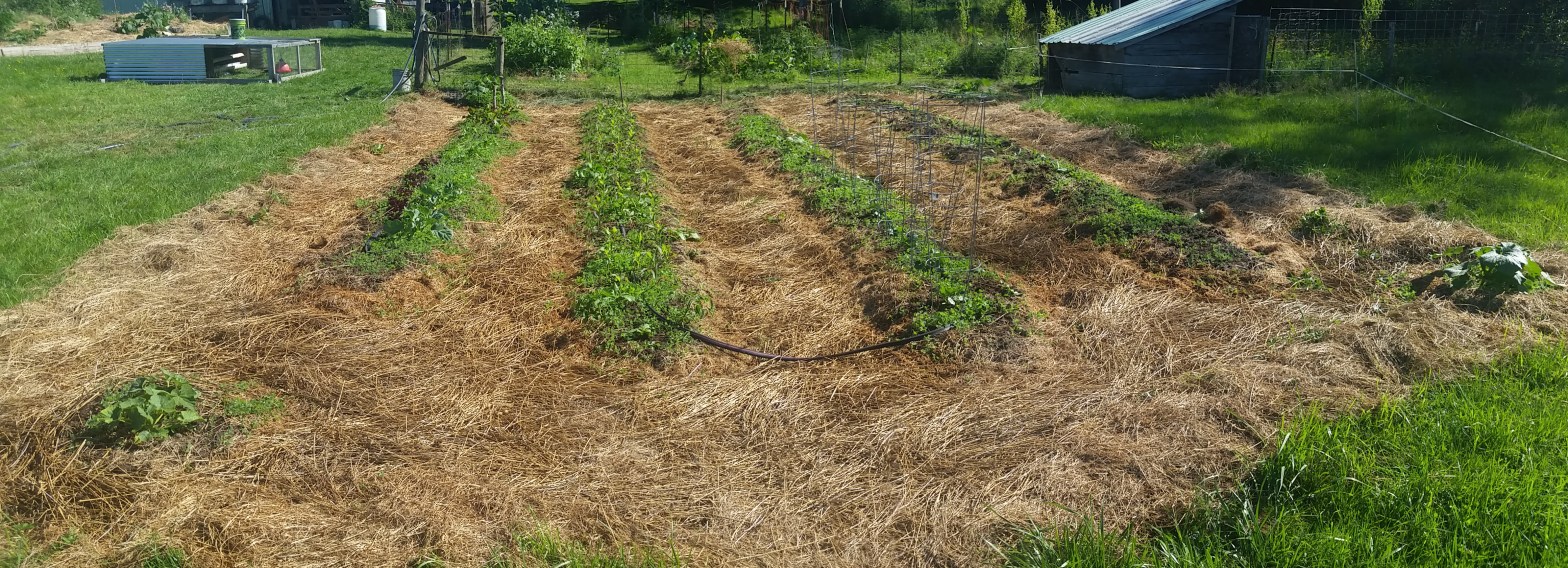
Needing additional space for cabbage, beans, corn, and winter squash, we decided to expand the vegetable garden this year. The ideal location for this row cropping is our level pasture, of which we have WAY more than we can use at the moment.
The spot we decided to annex was covered by foot-tall grass, along with the usual weedy suspects (buttercup, thistle, dandelion, lamb’s quarter…). American Guinea Hogs love to munch the majority of the greens above ground as much as they like roots and grubs below. So, we corralled the piggos within electro-net and sat back while they did good work. This spring was really, really wet, and even with small pigs on the grass, they rooted it up lickity split. 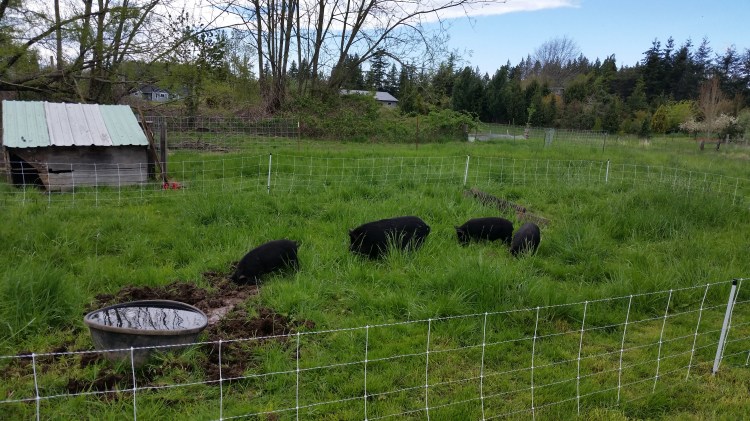
We left them on the annex for a good three weeks, and all we had to do was top off their water, bring them a spot o’ dinner, and of course give a belly rub from time to time. When all was said and done, they ate and dug up about 80% of the green matter. Some root clumps still clung on tight, and the clayey soil was not yet workable.
 To speed things up, we rented a heavy duty tiller, since the pasture had finally dried enough to use it. (We also used it to repair a large over-used weedy paddock while we had it). Then, the best tillers of all got involved to finish it off: the chickens. We put 6 hens in the portable chicken tractor and moved it daily for another week.
They scratched and pecked at weed seeds and bugs, further softening the soil. Both the pigs and chickens, of course, fertilized the entire area.  With the soil finally friable to a few inches, I raked it into raised beds. Then, I mulched the pathways with bog rush–a reedy and otherwise useless (to my knowledge) plant that takes a long time to break down. I also lined the steep bed edges with scythed grass clippings to retain moisture and keep down weed pressure.
I broadcasted a living mulch of red clover and we transplanted the veggie starts.

That was May/June and now in mid August the garden is gangbusters. The corn is tall, we’re pickling beans and cucumbers every weekend. The swiss chard is large and delicious. The cabbage looks good, the beets are coming along, and the winter squash is taking over.
I will admit that the clover has been more vigorous than I imagined and it has threatened to swallow up the adjacent veggies. But, with regular and selective mowing with a serrated sickle it doesn’t impede its neighbors. In fact, with its nitrogen fixing properties, it actually helps!
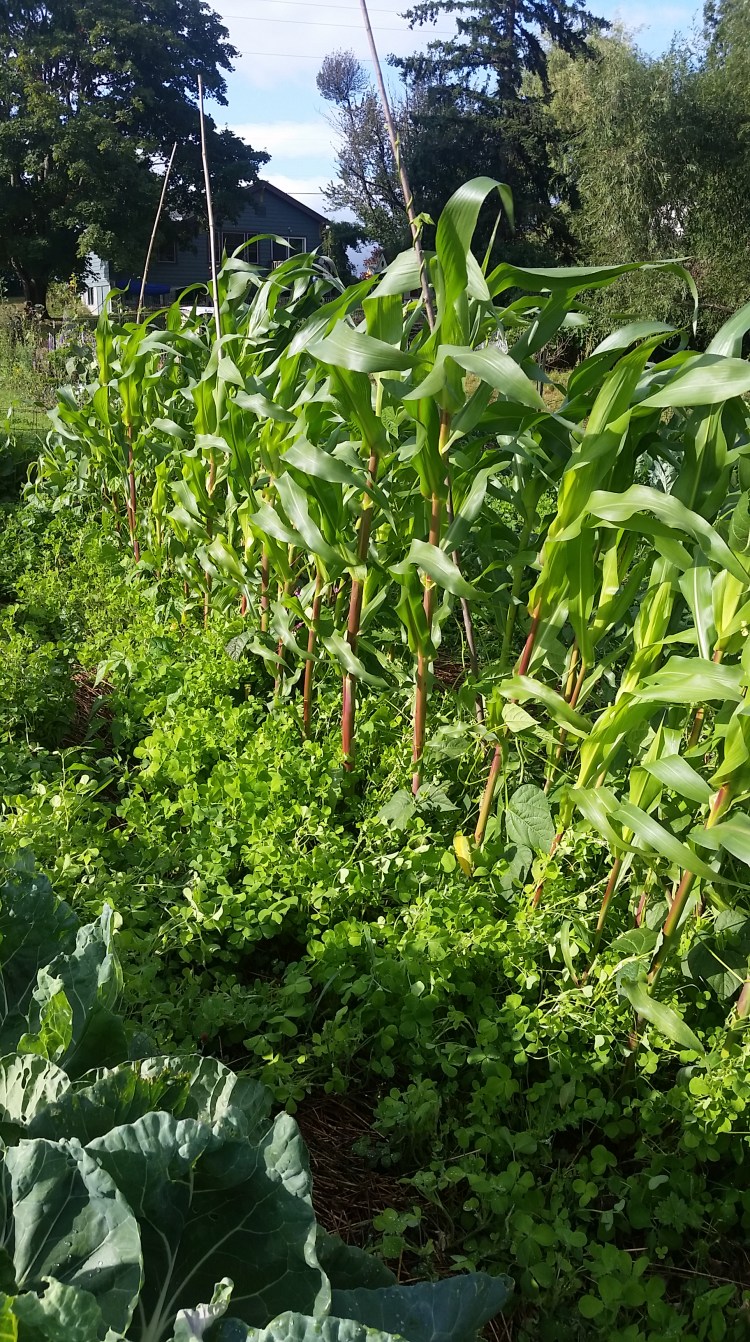
My understanding of nitrogen fixers is they will take free and available nitrogen from the air and put it into the soil through nodules in their roots. When cut back, they will self prune their roots to match the above ground pruning and release even more.
As an added bonus, the chickens and pigs get repaid for their hard work with a high protein snack in the form of the cut clover and any errant weeds. Of the latter, there really aren’t many since the clover germination rate had to have been upwards of 90% and it created a dense carpet that suppressed weed growth.
Because I broadcast by hand there were thin patches. In these open areas I later direct-sowed beet seeds. Then when mowing/harvesting the clover, I used nearby clover to mulch the seedling beets. Below you can see the before and after freeing the beets.


Believe it or not, that first photo with the pigs is taken from the same vantage as this bunch of abundance. So, something is working anyway!
 Bellfern Homestead
Gorgeous!
LikeLike
Thank you! I am happy how it has turned out this far. Time will tell how the beds do in following growing seasons.
LikeLike
Hi there! Discovered your blog today and enjoyed reading about your experiences. We are market farmers in central Ohio and grow veggies and raise chickens, so we have a lot in common!
LikeLike
Yes indeed! I’m sure you can relate to the challenge AND the reward. Thanks for stopping by!
LikeLike