Settling in: Zone 1

When we decided to buy the farm, we vowed that we’d jointly blog about the adventure and the property’s transformation. We’ve now been here for 2 weeks, and it’s been a flurry of nonstop action. When we moved in, the grass hadn’t been mowed in weeks, and the formerly loved landscaping surrounding the house and barns had been overwhelmed by tall 3 ft. grass that has gone to seed. Every waking hour has been spent mowing, sheet mulching, weeding, pruning, and generally trying to reclaim some space from rapidly encroaching wilderness. Not to mention unpacking boxes and working our full-time jobs.

We’ve struggled to make time to eat, let alone blog. Our friend Bob reminds us, “It’s a marathon.” As a long-distance runner, this resonates with me, because while I know the importance of pacing in a race, in the rest of my life I tend to sprint, and I burn out fast.

20160317_122511
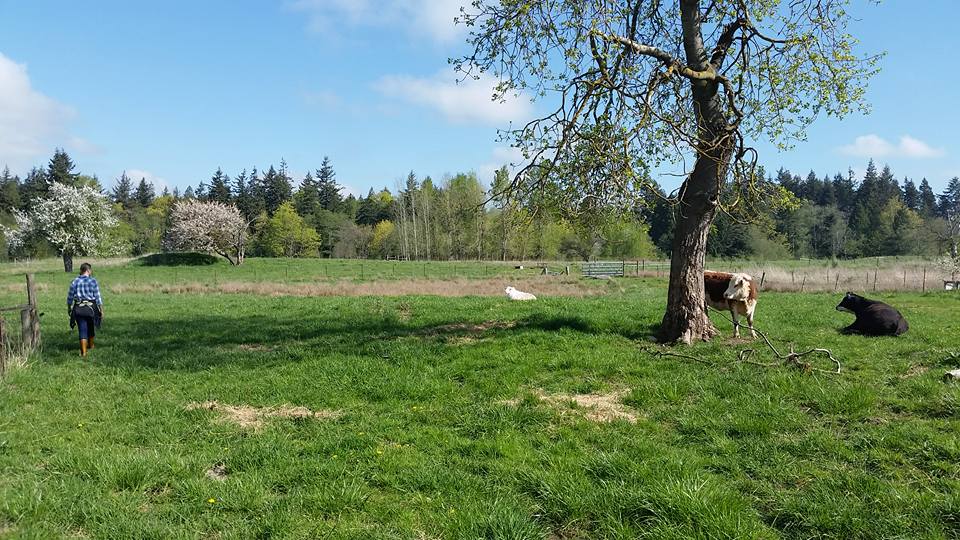
Halfway back to the creek, looking south toward the house and barns.

The property is laid out on a north-facing slope, with the house and barns at the top of a slight hill. The whole property gently descends over acres of green pasture, ending at a wooded creek at the back property line. It’s lovely, but at this point it’s little more than a landscape, because we’re not doing anything with it and have no immediate plans. We’ve vowed to observe the landscape for a year before moving any earth or planting an orchard, to find out where the frost pockets settle and which places have the most light.

We have a vision of building a permaculture system on this farm–it seems the only reasonable way for two part-time homesteaders to manage such a large piece of land. We don’t have the time to manage it ourselves, so we need to design systems that will manage themselves to some degree. Adding animals will go a long way to helping us manage the large pasture (which is currently 3 ft. tall grass). Digging ponds will improve the biodiversity and help us manage the wet spots. But it’s hard to make firm plans about the long-term property design when everything needs so much attention.

So we’re starting at the house and barns. While I unpack and arrange furniture and settle the things of our life into new corners and shelves, Josh cleans the barns and organizes his tools. We mow the grass immediately surrounding the buildings, and have begun sheet mulching the abandoned landscaping around the house. We’ve called a roofer, and ordered appliances.

Although it feels like we’re neglecting everything but the front acre (because we are), it’s still permaculture. Permaculture principles emphasize the importance of zones, which move from 0 to 5, starting with the home as 0, moving out through the most managed areas that we interact with numerous times a day (veggie patch, barns), moving out to the areas that we visit once a day (dog yard, chicken house), to areas that are visited once a week, to lightly managed land (nut trees) all the way back to zone 5, which is basically wilderness.

We are focusing on Zones 0 and 1, and then our homestead skips straight to zone 5. But we’re pacing ourselves.
We bought the farm.

It seems that we have bought a farm on 7 acres of pasture, with a slightly ramshackle craftsman house, two barns in questionable repair, a creek, a flock of chickens, two temporary cows, and a sheep.

But I don’t even want to go there yet, first of all because it’s only 97% certain that this farm will become ours, and second because I’m still here, on my beautiful urban homestead, and first I need to say goodbye.

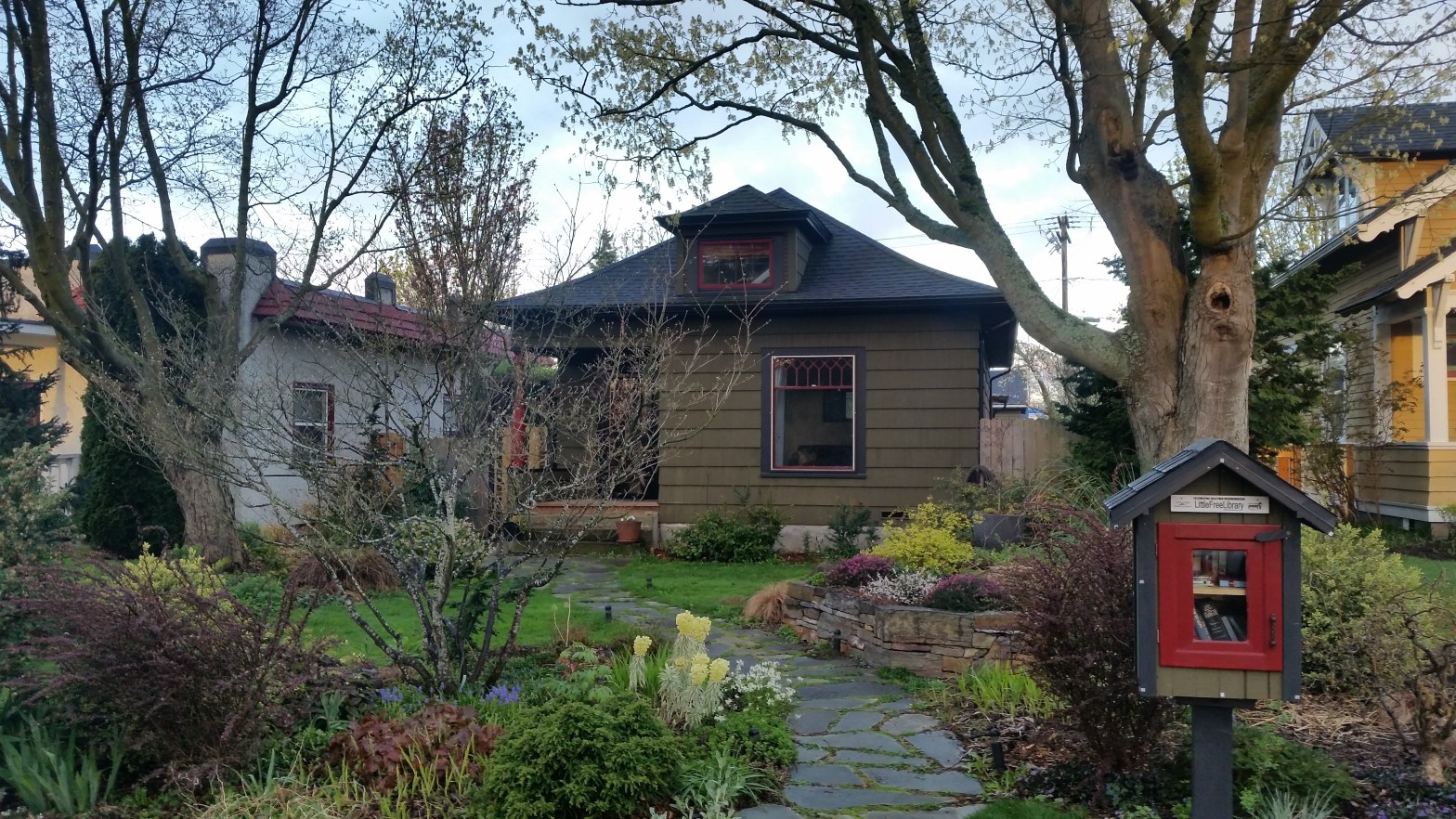
In 2008 Josh and I bought a 1908 Craftsman house on a 5000 sq. ft. lot in Bellingham, WA. When we bought it the home had been nicely remodeled (though painted a crazy palette of primary colors), but the yard was a jungle of waist-high weeds, unpruned maple trees, rotten decking, and yards and yards of drain rock.

view 2 before
There’s a garage back there somewhere under all that green.
DSCN0091
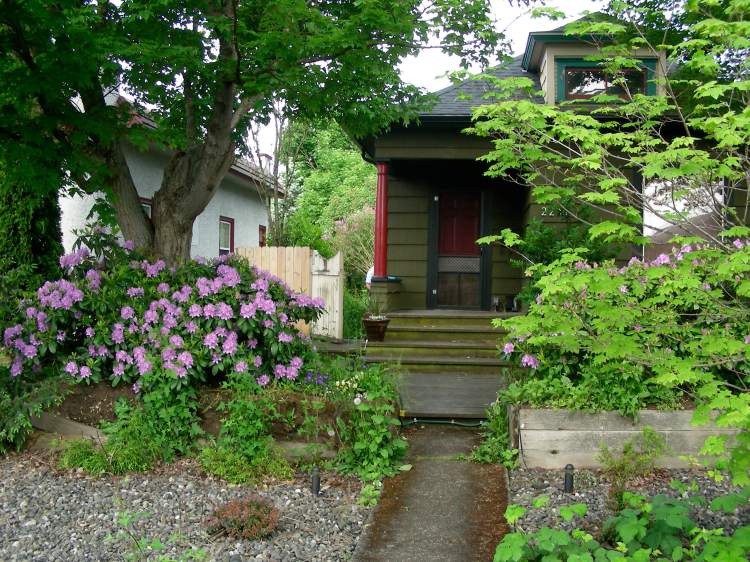
The rhododendrons disguise the awfulness of it.

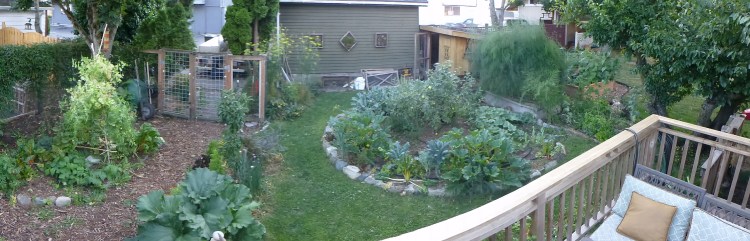
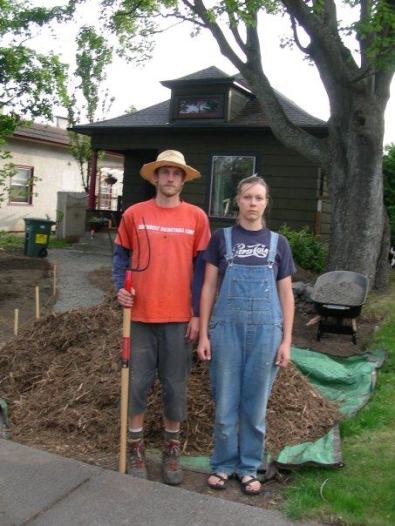
Over the course of 8 years, we transformed the small overgrown city lot into an urban homestead paradise. The first three years were exhausting and back breaking–we spent so many weeknights and weekends shoveling yards of soil, compost, rock, and mulch from truck to wheelbarrow to garden–but they were fulfilling and purposeful, and we remember feeling energized and happy (most of the time).

After the yard was finally given a purpose and growing something useful, we decided that the attic space above our one-story 860 sq. ft house might as well be used, so we set off on an 18 month project of converting the unfinished attic into a sewing studio and quiet space with half bath.

DSCN0649
This was how we spent every weekend for about a month.

The end result was a quiet retreat for meditation, crafting, and guests.

Once that project was solidly underway, we built a chicken coop and added a flock of layer hens, followed by a flock of 14 meat chickens that we butchered on our back deck (to the horror of our vegetarian neighbor).

P1050295

Mason orchard bees pollinate the apple, blueberry, raspberry, and plum trees out back.

P1090628

In short, we have created the home we dreamed for ourselves. It’s beautiful, peaceful, productive, fertile, safe, and sustainable. But it’s also finished, for the most part. There’s little more that we can do here but plant new veggie starts each spring. We’re both young and have 2-3 decades left in our working lives and we’re not quite ready to be so…well-rested.

And so.

About a year ago we began to contemplate “the next.” It started with tinkering–organizing the workshop, building a few more raised garden beds. And then it evolved into new building plans–where could we squeeze in a sauna? Until we finally acknowledged that maybe what we really wanted was to do this all again on a bigger scale.

Are we crazy?!?

My wise friend Aimee says no, we’re not. She says that humans are industrious creatures who crave occupation and purpose, even when it’s risky. She pointed to the Vikings who struck out on dangerous journeys across the sea to explore no one knew what for no other reason than that it was their nature.

Aimee also reminds me that it’s Ok to feel so conflicted about leaving our beautiful home to start again. As much as we are excited for the potential of 7 pastured acres and a small homestead, our grief about leaving this place is “also true.” One emotion does not exclude the other. We’re sitting with many “also trues” as we rapidly approach the closing date on the sale of our urban home and the purchase of the farm.

Although it’s hard to imagine leaving behind all of the work and improvements over the last 8 years, it’s been a crucial time for learning new skills and gaining confidence. Our urban homestead has been an excellent proving ground. I know a hundred percent more about building, gardening, and small livestock than I did when we started, so in many ways I’m so much more prepared for what lies ahead.

Things I learned how to do in the last 8 years: install flooring, wire outlets and switches, refinish cabinets, plumb sinks and toilets, cope crown molding, replace toilets, hang a door, hang a gutter, roof a structure, draw blueprints, use saws–table, jig, miter, and reciprocating–house mason bees, build a chicken coop, raise egg chickens, raise meat chickens, slaughter meat chickens, sheet mulch, cover crop, build arbors, build gates, reframe windows, harvest vegetable seeds, and prune fruit trees.

I can’t say that we’re ready to become real farmers, because there’s still so much we don’t know. But we’re ready to learn. Because we bought the farm.

Farm Gwen n Farmer Josh