Moles, what a scourge, right? Busily making mounds in your front lawn and tunneling through the garden nibbling on roots. Gasp! Although our days of upholding a certain amount of curb appeal are over, I’m still occasionally annoyed by the active mole population here at the homestead. I like to mow grass and cut hay with a scythe and there’s little more frustrating than dulling the razor sharp blade in one of those freshly tilled hills.
In permaculture (a design science based on natural patterns) there’s a saying, “the problem is the solution.” Although I haven’t fully wrapped my head around that one yet, I’m beginning to understand the wisdom of facilitating interconnected systems. Of ‘closing the loop’ if you will. Because we are only part-time farmers, interconnecting systems is the only way we are going to have a shot at managing so much property as it saves time, money, and effort.
Here we’ve got the problem of a mole mound ruining the efficiency of my work. Traditional gardening wisdom says to remove the problem by removing the mound, right? Sure. Or better yet, poison the little buggers. Then no more mounds! Well, to that I say, have you ever seen the movie Caddyshack?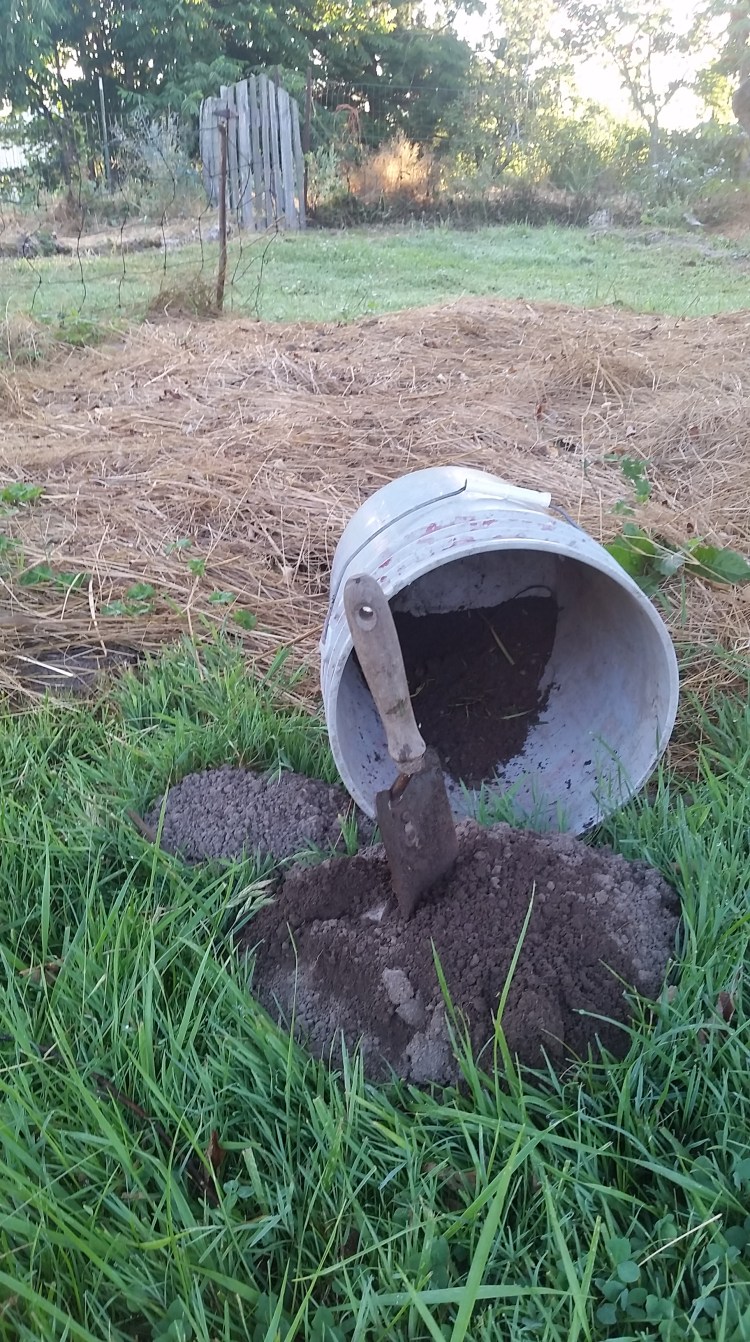
Again, much of what we do needs to have multiple affects (stacking functions, another permaculture principle). If you must remove the mound, you should also harvest the mounds. The same goes for grass clippings and weeds which become mulch or fodder for animals. A fruit tree can be aesthetically pleasing, delicious, provide shade, a place to hang a hammock. You get the idea.
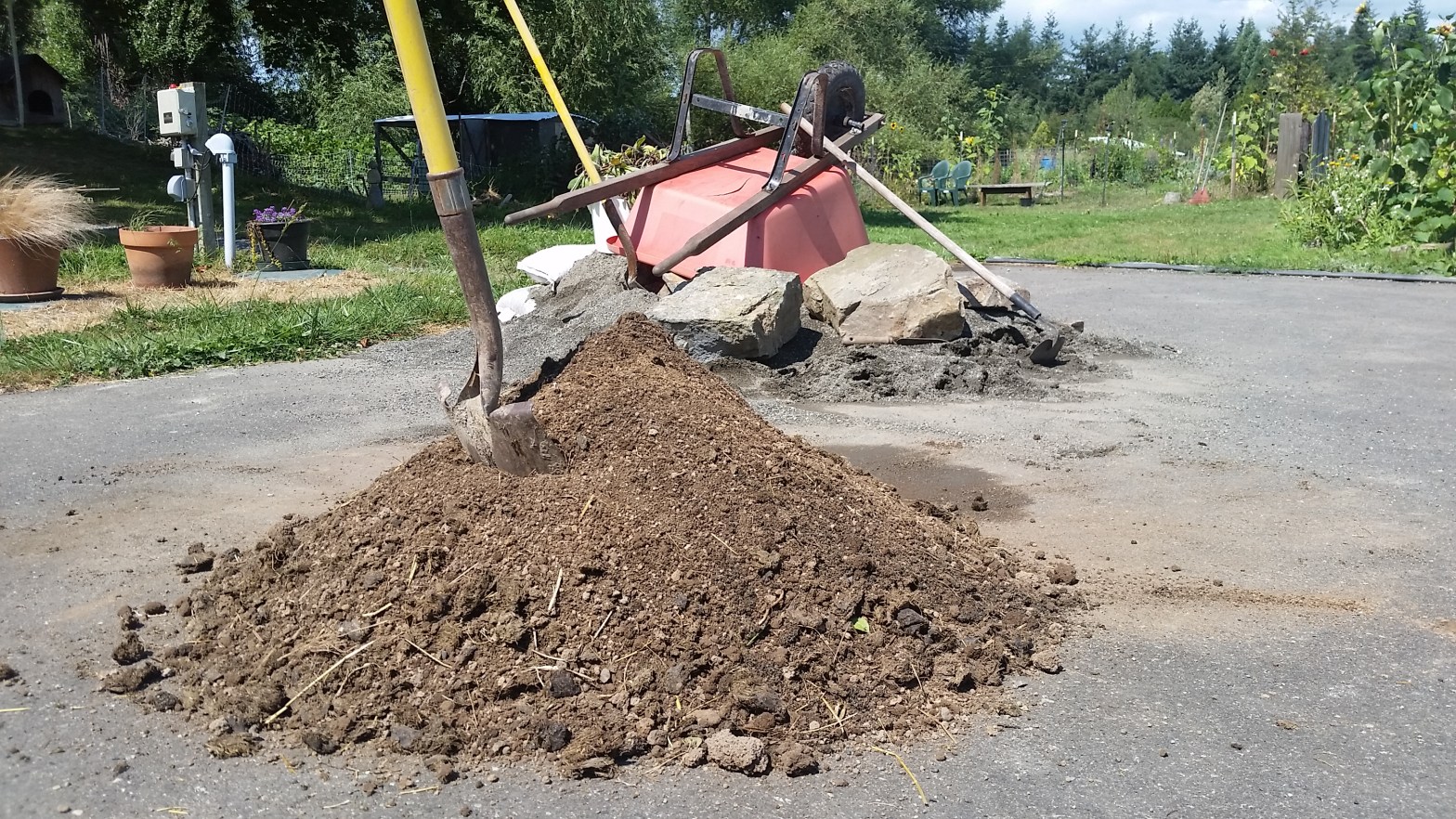
Back to the moles. So far they haven’t caused any discernible damage to any crops, so I let them be. (Rats and sparrows have not been so lucky.) Truly, I am currently celebrating their incessant and thorough tilling because of the fine soil they produce. Twice now I have made 6 cubic foot batches of what I like to call mole mix. 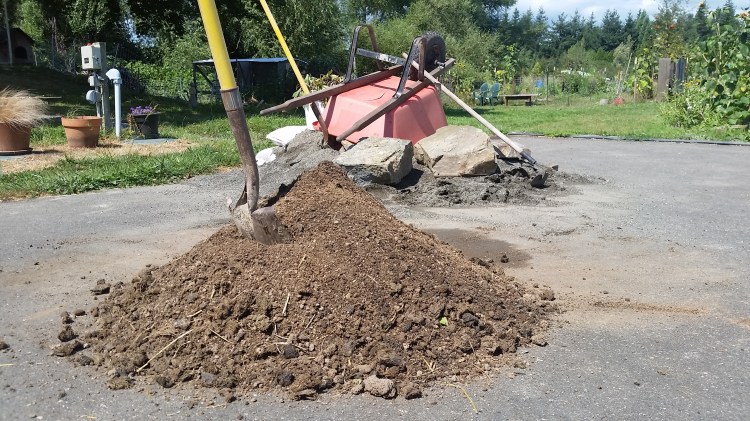
Now our property is very clayey, so what the moles churn is also clayey. And clayey means theres little air and a lot of locked up nutrients. So, to the mix I add organic matter and sand. We’ve had a sand pile lying around since I laid the custom greenhouse foundation.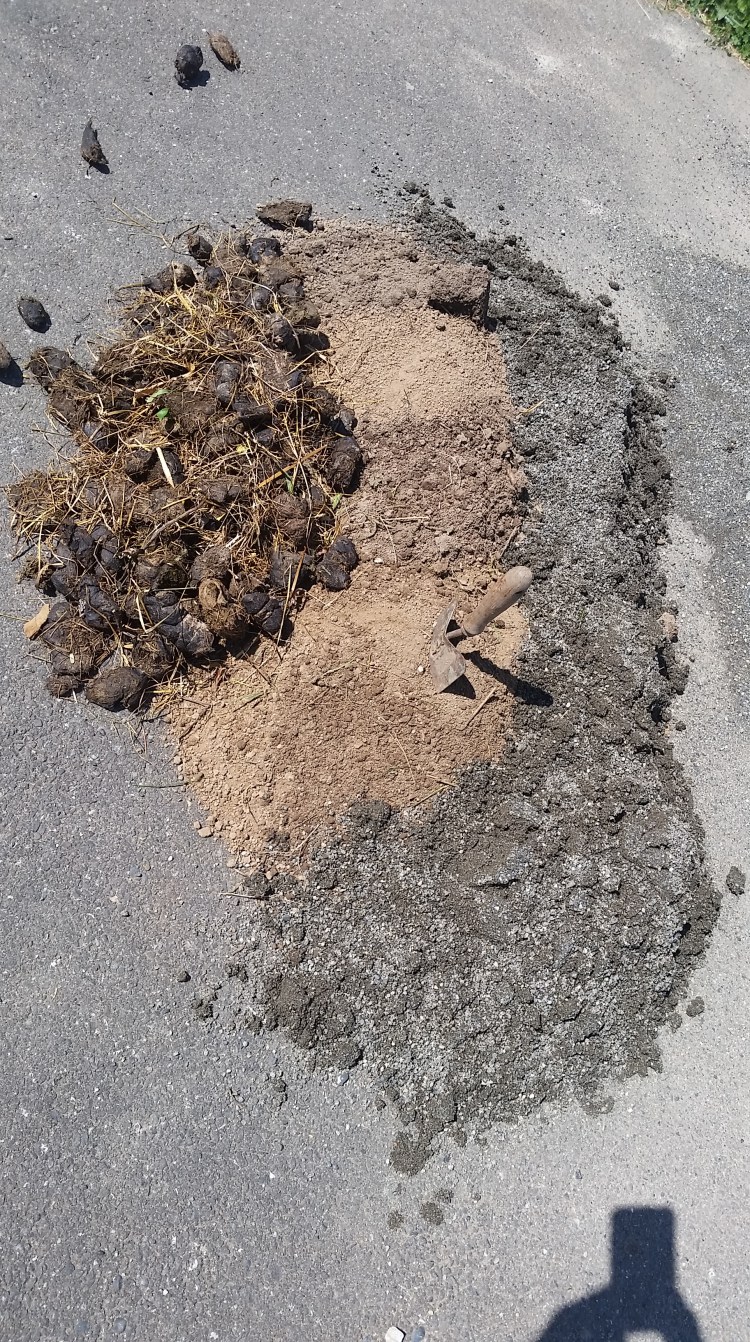
As for the organic matter, our compost pile isn’t ready yet, so I grabbed a bucket of pig poo (which needed to be scooped anyway; problem <–> solution). The poo was decidedly poo shaped and needed some pulverizing, which was easy enough on the asphalt driveway with an old hoe. Recipe as follows:
Mole Mix:
- 4 buckets mole hills
- 7 shovels of sand
- 1 bucket pig manure (or 2-3 of compost)
Mix. Spread. Sow seeds. Water.
I just furrowed a channel in the mulch, shoveled and leveled the mix and voila! Better than any seedling mix you can buy in a bag. Time will tell how weedy it gets, but in reference to another 80s movie, “I ain’t scared a no (ghost) weed.” 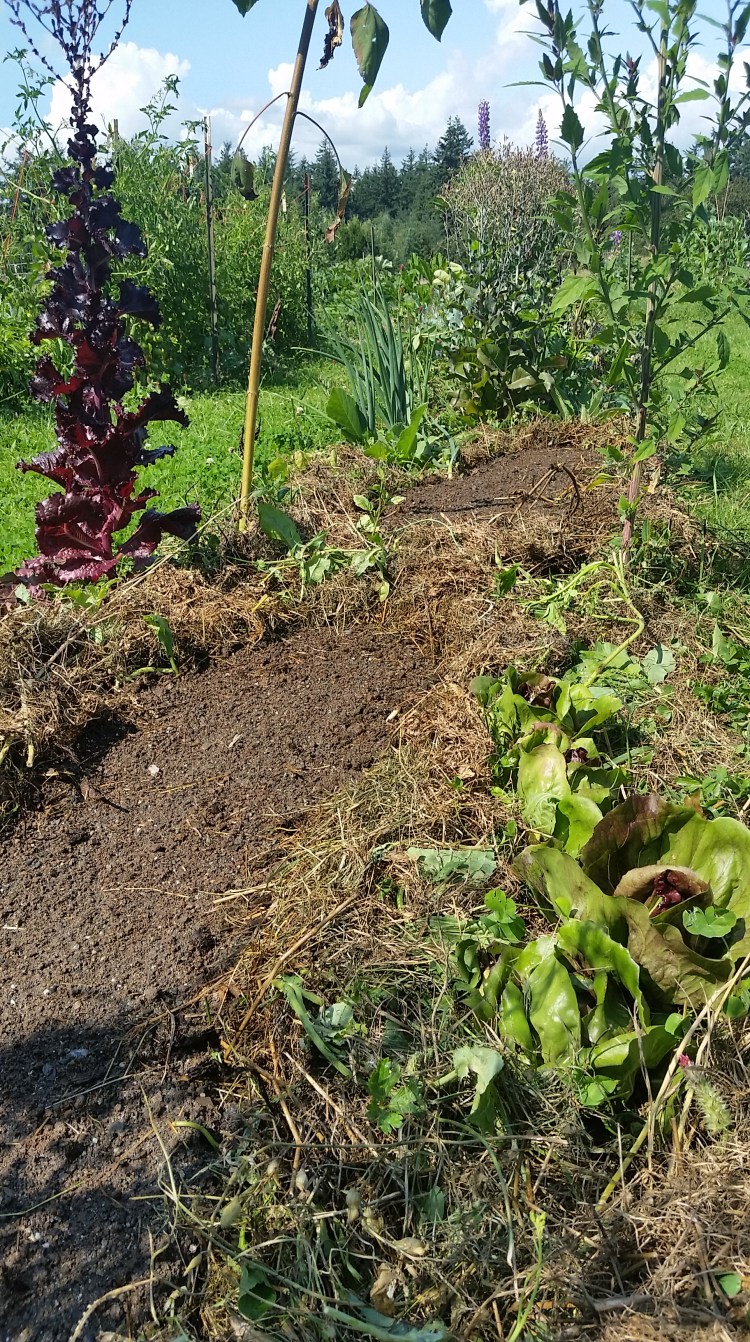
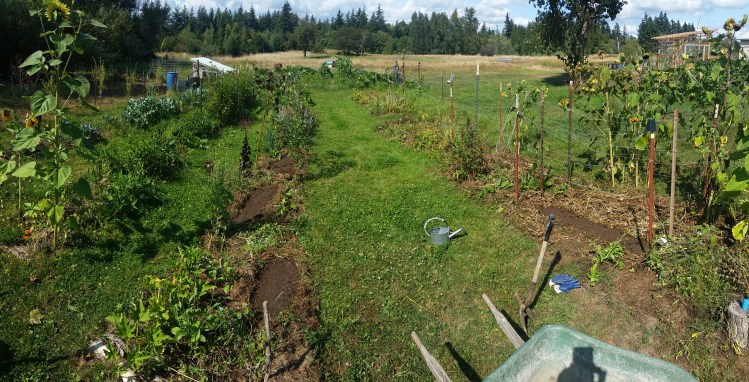
Apparently, making a mountain out of a mole hill turns out pretty good!
 Bellfern Homestead
There are moles in our area as well (at neighbors and such) but thankfully they’ve stayed off our property thus far. Only time will tell if they move in here. Good job working with them instead of against them.
– Christine
LikeLike
Thanks!
LikeLiked by 1 person
Thanks. Yes, permaculture has infected my brain I’m afraid and I see it EVERYEHERE. 😊
LikeLike
Fabulous. Don’t you love the permaculture stuff? Wowsa!
LikeLike